Increasing recovery without losing the soul of fair chase
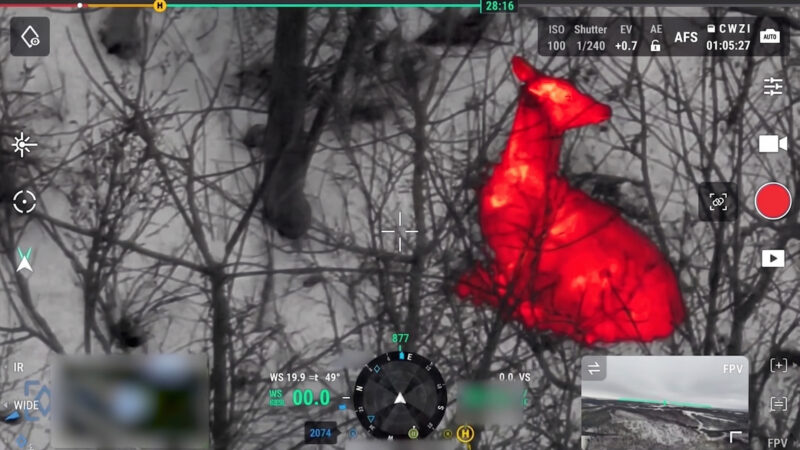
Simulated thermal image of a bedded deer
Modern hunting technology continues to move faster than our regulations can keep up with. As new products and high-tech tools hit the market and make their way into the timber, we find ourselves in increasingly grey and controversial territory.
The emergence of thermal drones for deer recovery has created a divide in the hunting community. It’s forcing us to take a hard look at a technology that can significantly increase the recovery of wounded game, while simultaneously opening a massive door for potential abuse.
The Eye in the Sky: What is a Thermal Drone?
To understand the debate, you first have to understand the technology.
Unlike standard hobby drones, a thermal recovery drone is equipped with high-resolution infrared (IR) sensors capable of detecting heat signatures from hundreds of feet in the air, allowing a pilot to spot the thermal bloom of a downed deer tucked into thick CRP, standing water, or a cedar thicket where a human eye or even a tracking dog might struggle.
The capabilities are, frankly, incredible. A skilled pilot can scan a 160-acre block in roughly 15 to 20 minutes, a task that could take a grid-search team an entire day, and pinpoint a wounded or dead deer without ever stepping foot on the property, minimizing the “human footprint” and leaving the rest of the deer herd undisturbed.
A thermal imaging capable DJI drone preparing to take off
The Legal Patchwork
As of the 2026 season, the legality of using this tech is a confusing patchwork as we see a massive wave of “Recovery Only” legislation moving through state capitals.
States like Tennessee have recently approved drone recovery for the 2026 season, while others like Indiana have clarified laws to allow tracking for wounded game while strictly prosecuting those who use them for scouting.
However, many states still view drones through the lens of the “Federal Airborne Hunting Act,” keeping them strictly illegal for any use during a hunt. In places like Louisiana, Iowa, and South Dakota, the debate is currently in the halls of the legislature, with lawmakers trying to balance the ethical duty of recovery against the long-standing principles of Fair Chase.
Because the regulations are moving so fast, it is currently “unknown territory” for many hunters, making it vital to check your specific state’s DNR handbook before making the call.
The Case for Recovery (The Pros)
At the heart of the pro-drone argument is a foundational ethic of bowhunting: the absolute recovery of the animal.
We have an obligation to ensure that for every arrow released we are dedicated to see the hunt through to the end, whether it ends with a successful recovery or confirmation of a live animal. For many, thermal drones are the ultimate insurance policy for upholding that duty.
“Anything that helps you recover that deer, especially if it’s been dispatched, should be legal.”
-Scott Evans, Bow Boy
During the 2026 ATA show we walked the floor asking hunting celebrities & influencers whether they thought using thermal drones for recovery should be legal.
“Any that helps you recover that deer, especially if it’s been dispatched, should be legal” -Scott Evans, Bow Boy.
And the sentiment was nearly universal in agreement, many believe exhausting every available resource is simply part of being a responsible hunter.
See what folks had to say about the legality of thermal drones.
The Slippery Slope of High-Tech Scouting (The Cons)
The pushback against drones isn’t usually about finding a dead deer, it’s about the potential for scouting live ones.
On a recent episode of The Watering Hole, professional dog tracker John Engelken, widely known as “Tracker John,” voiced his concerns. “I think there’s a lot of negatives, with the drones, that people are not considering.”
Engelken lists a number of potential issues that could result:
Altering the perception of “acceptable shots” and increasing the number of marginal shots taken at game
Increasing long-term mortality rate due to bad shots
No real way to enforce drone use just for recovery and not other purposes
“I think we’re handing the anti-hunters one of the biggest talking points they possibly could have.”
-John Engelken, ‘Tracker John’ Professional Dog Tracker
He also relayed a story he heard, where a hunter with ear buds was directed within range of a deer from a drone operator.
“I think we’re handing the anti-hunters one of the biggest talking points they possibly could have,” Engelken added.
Pandora’s Box is Wide-Open
One of the most grounded points in this debate is that the technology is already here. Making it illegal for recovery doesn’t necessarily stop the abuse, it only keeps the tool out of the hands of those who follow the rules.
“Everybody is down on drones because they think that if you say ‘yes’ to whatever, they’re going to abuse it. If they’re going to abuse it, they’re going to abuse it anyways. I’ll argue that all day long with anybody.” – Spook Spann
And while accessibility is sure to increase as prices decrease, most of the drones used for this purpose cost well into the 5 figures. Your average joe-blow isn’t picking up one of these to mess around with on the weekends.
Whether it’s drones, dogs, cell phones, or cell cameras, those intent on breaking the law will do so. By keeping drones in the “illegal” shadows, we lose the ability to regulate their use and ensure they are being used for the right reasons.
Two drones with thermal cameras taking to the skies for a winter deer survey
Social Accountability
If we want to protect the sport, the answer might not be more unenforceable laws, but better social accountability.
“I think hunters are fairly proficient at policing our own,” Said Justin Zarr in response to Tracker John’s hesitations over legalization of drones, “I don’t think the general hunting public would be ok with hunters using drones to target specific animals and go hunting, because that’s going to continue to be illegal which is going to continue to be poaching.”
The Path Forward: A Regulated Place in the Woods
There is a middle ground. Just as we utilize certified tracking dogs and handlers, there is a place for certified, registered thermal drone operators.
By regulating the service, rather than just the device, states can ensure that drones are being used by professionals who understand the difference between recovery and poaching, and (perhaps more importantly) have something substantial to lose if they are caught operating outside the law.
Final Thoughts
At the end of the day, no hunter wants to see an animal go to waste, but we also can’t afford to see the sport lose its soul.
As we move deeper into this high-tech frontier, the burden falls on us to ensure that access to tech doesn’t blind us to the values that brought us into the woods in the first place.
Through certified professional pilots and strict social accountability, drones should remain a tool for recovery, but never a means for chase.
A Full-Time Marketing Manager at Bowhunting.com and Rhino Group, Mike is an avid outdoorsman, videographer, and photographer living in Northern Minnesota on the edge of the Boundary Waters Canoe Area Wilderness with his wife and son.