Mathews LST vs. Bowtech Deadlock vs. Elite S.E.T.

By August 22, 2025

If you’ve got your finger on the pulse of compound bow technology, you know that built-in bow tuning technology is quickly becoming the standard among leading bow manufacturers these days. And for good reason.

Such technology allows archers, bowhunters, and bow shop technicians to tune a bow faster and easier than ever. Say goodbye to the hassle of paper tuning your bow with all the trips back and forth to the bow press, twisting cables and the time consuming task of getting your bow properly tuned.

Mathews new Limb Shift Technology (LST)

These days, bows built with this tuning technology give you micro-control over lateral tune and cam attitude without tearing a bow apart. 

The big three making it happen in 2025 are Mathews’ Limb Shift Technology (LST), Bowtech’s DeadLock, and Elite’s S.E.T. (Simplified Exact Tuning). 

Here’s how each works, how they differ, and some honest pros/cons from a bowhunter’s perspective. Watch it in the video below.

How They Work

Mathews LST (Limb Shift Technology)

LST lets you micro-adjust the limb channel width with an Allen wrench, without a press.

The cams stay fixed in the pockets; you’re shifting how the limbs load in the channel, which changes lateral nock travel and cleans up tears.

It’s designed to replace most of the old Top Hat shim work for sideways corrections.

Mathews Lst Vs. Bowtech Deadlock Vs. Elite S.e.t.

Bowtech DeadLock

DeadLock uses a rack-and-rail style axle carriage on each cam. Turning the DeadLock screws slides the cams left/right on their axles. 

You simply watch your tear through the paper, and walk the cam until the tear disappears—then lock it down.

Mathews Lst Vs. Bowtech Deadlock Vs. Elite S.e.t.

Elite S.E.T. (Simplified Exact Tuning)

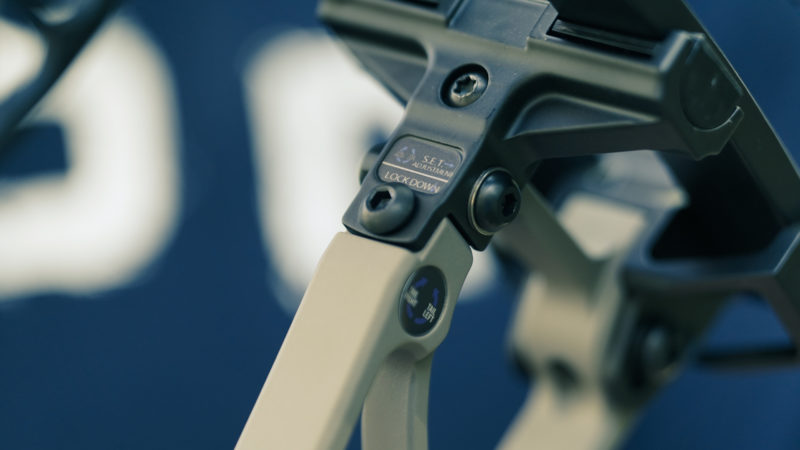
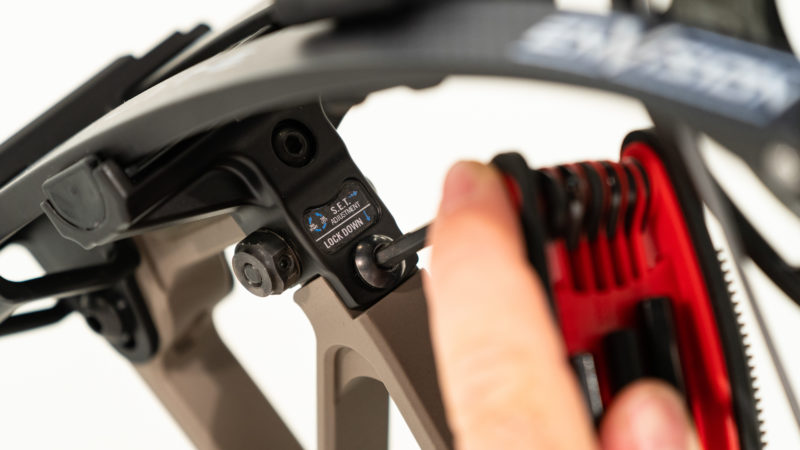
S.E.T. puts an adjustable limb-pocket pivot in each pocket. You turn the S.E.T. screws to slightly change pocket angle, which in turn alters cam lean and centershot together. 

It’s effectively moving the entire limb system rather than the cam/axle alone.

2023 Elite Omnia Bow Review

The Difference in How They Move

Mathews LST: The LST design is built to move the limb tip. This adjusts the limb channel position/load while cams remain fixed.

Bowtech DeadLock: Cam movement is the key design for tuning. The cam moves laterally on the axles.

Elite S.E.T.: The Elite concept finds the limb pocket moving in the tuning process. The design pivots the entire limb pocket, changing cam lean and lateral position together.

Pros & Cons of Each System

Mathews LST

Pros:

  • Press-free micro-adjust of limb channel; fast broadhead and bareshaft cleanup.
  • Keeps cams fixed, which can feel mechanically “solid” and simple to track.

Cons:

  • Newest of the three – third-party tutorials are still catching up.
  • If you’re used to Top Hats, the workflow is different.
Mathews new Limb Shift Technology (LST)

Bowtech DeadLock

Pros:

  • Very intuitive: move the cam toward the paper tear, shoot, repeat, lock.
  • Lots of how-to content and product support.

Cons:

  • All the change happens at the cam/axle – users must remember to lock settings to prevent movement.
  • Possible hardware wear if over-torqued or adjusted constantly.
Bowtech Proven 34 Bow Review

Elite S.E.T.

Pros:

  • Single adjustment influences lean and lateral together.
  • Shooter-friendly design and instruction built in.
  • Established technology on multiple Elite hunting/target models for years – plenty of real-world results and tutorials.

Cons:

  • Because one knob affects two variables, it’s easy to overshoot. Make small moves, and adjust accordingly.
  • Hardware needs to be snug and maintained; loose S.E.T. hardware can cause creeping.
2022 Elite Envision Bow Review

Which One Works Best?

Which is best? Well, that’s a matter of opinion – and you know what they say about opinions, right? 

It’s likely that whatever brand you’re partial to will likely get your nod for “best of the best.”

However, for pure simplicity and repeatability, DeadLock is tough to beat for most DIY tuners: slide a cam, shoot, lock—done.

For fastest premium-bow setup with the cams fixed, LST is simple, yet feels mechanically robust; it’s a huge shooter-friendly upgrade for Mathews fans who used to juggle shims.

For minimal-step tuning when both lean and lateral need help, S.E.T. can be the quickest route—especially on bows that respond well to pocket-angle tweaks.

Bottom line, “best” depends on whether you prefer moving cams, pockets, or limb channel/load.

Mathews Lst Vs. Bowtech Deadlock Vs. Elite S.e.t.

Final Thoughts

All three tuning systems deliver press-free lateral tuning that genuinely shortens setup time. Time is hard to come by these days. That’s why this kind of technology is so beneficial to archers. It’s a pure and simple time saver.

As previously mentioned, this technology is quickly becoming a standard feature among leading bow brands these days. What brand will be next to bring tuning technology to their lineup?

I personally think it’ll be Hoyt. Time will tell. What about you? What brand do you think will be next to deliver?

Comment below, and let us know what you think.

Brodie Swisher
Brodie Swisher is a world champion game caller, outdoor writer, seminar speaker and Editor for Bowhunting.com. Brodie and his family live in the Kentucky Lake area of west Tennessee.
Post a Comment

Login To Account

Your email address will not be published. Required fields are marked *