Why resurgence of this flesh-eating fly matters to bowhunters.
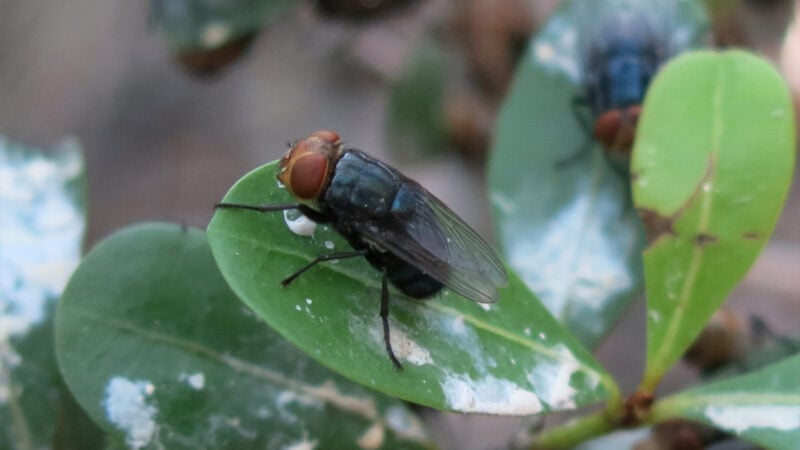
A steril New World screwworm fly. Photo courtesy of USDA
I remember growing up and hearing warnings about killer bees invading from the south. Let’s not forget the unstoppable march of army ants devouring everything in their path.
My adolescent brain was convinced we were in for the fight of our lives. Even my hero MacGyver had to fight off the ant invasion, giving me hopes of joining an army of DIY flamethrower-wielding soldiers.
More recently, news outlets heavily covered the threat of murder hornets during the lockdowns of 2020.
For the most part, these insect invasions never materialized into anything that changed how we live, work, or hunt in the autumn woods.
The current situation on our southern border is different. This is not an overhyped headline, but a verified wildlife and livestock management crisis.
The USDA just confirmed that the New World screwworm ( NWS) has been detected inside the United States in Zavala County, Texas.
This marks the domestic return of a highly destructive pest that the USDA and livestock industry spent decades fighting to eliminate.
WTH is a NWS?
I first heard about these nasty little critters from an article that our friends at the National Deer Association ran back in April, and I’ve been following it since.
These screwflies can infest livestock, wildlife, family pets, birds, and even humans. The adult NWS fly looks similar to a common housefly but is slightly larger, with a metallic blue-green body and distinct orange eyes.
Unlike standard blowflies that only target decaying matter, female NWS flies lay hundreds of eggs inside the open wounds of live hosts.
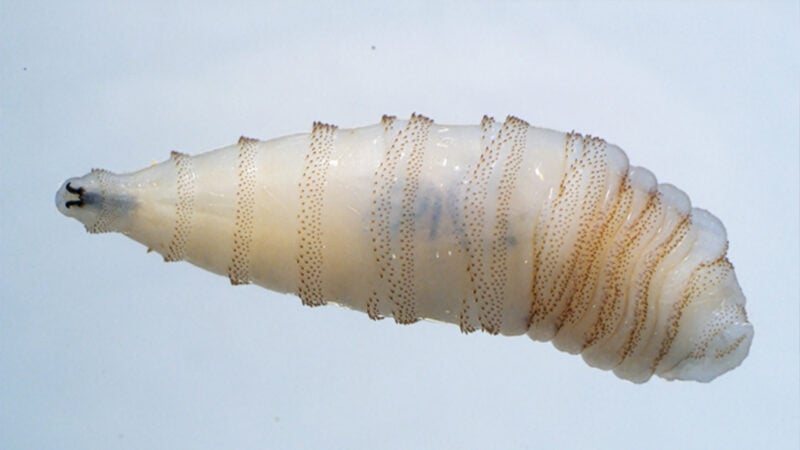
Once the eggs hatch within hours, the larvae use sharp mouth hooks to burrow deep into the living tissue to feed. The resulting bloody discharge and foul odor attract even more flies, compounding the infestation.
Left untreated, severe tissue destruction and secondary infections will kill the host animal within days.
Why It Matters to Hunters
If NWS takes hold in the United States again, the consequences for the hunting community could be severe.
Whitetail are vulnerable to the NWS at various points. In the spring and summer, newborn fawns are highly vulnerable to infestation through their unhealed umbilical cords.
Another major window of vulnerability opens during the autumn rut. As bucks battle for dominance, they inevitably sustain gashes and puncture wounds around their heads and necks.
NWS infestation in Key deer during the 2016 outbreak in the Florida Keys. Photo courtesy of CDC
The flies are also drawn to raw antler bases immediately after a buck sheds his velvet in southern, more mild states.
The USDA warns an uncontained NWS outbreak could present severe consequences for our hunting heritage:
Reduced Game Populations: NWS infestations heavily reduce the number of fawns that survive into adulthood. Untreated animals die, directly leading to smaller herds, fewer available tags, and more restrictive hunting seasons.
Poor Animal Condition: Infested wildlife experiences compromised meat quality, hide and antler deformities, stunted growth, and reduced antler development.
Disrupted Hunting and Restrictions: Wildlife management organizations could mandate physical check stations for game inspection. Additional surveillance may lead to closed hunting areas, and agencies can restrict live animal, meat, or carcass transport across county and state lines to prevent the spread.
Buck with a NWS infestation. Photo courtesy of CDC
How We Beat It Before
The only reason most modern hunters have never heard of this pest is due to an incredible conservation victory.
In the early twentieth century, NWS was a widespread plague that decimated wild deer populations and crippled the livestock industry. During the 1950s, federal researchers revolutionized pest management by inventing the Sterile Insect Technique.
They raised millions of male flies, sterilized them using radiation, and released them into the wild. All without creating other childhood expectations of mine: Mothra, The Fly, or some sort of mutant super hero.
When wild females mated with the sterile males, they laid non-viable eggs, causing the entire population to collapse. By 1966, the United States was officially declared free of NWS.
The push continued south throughout Mexico and Central America until they were contained to South America by 2001.
Unfortunately, during the pandemic, production was reduced at the Darien Gap in Panama. With this reduction, the international containment barrier failed in late 2022.
The parasite has since pushed steadily north through Central America and Mexico, culminating in the recent Texas detection.
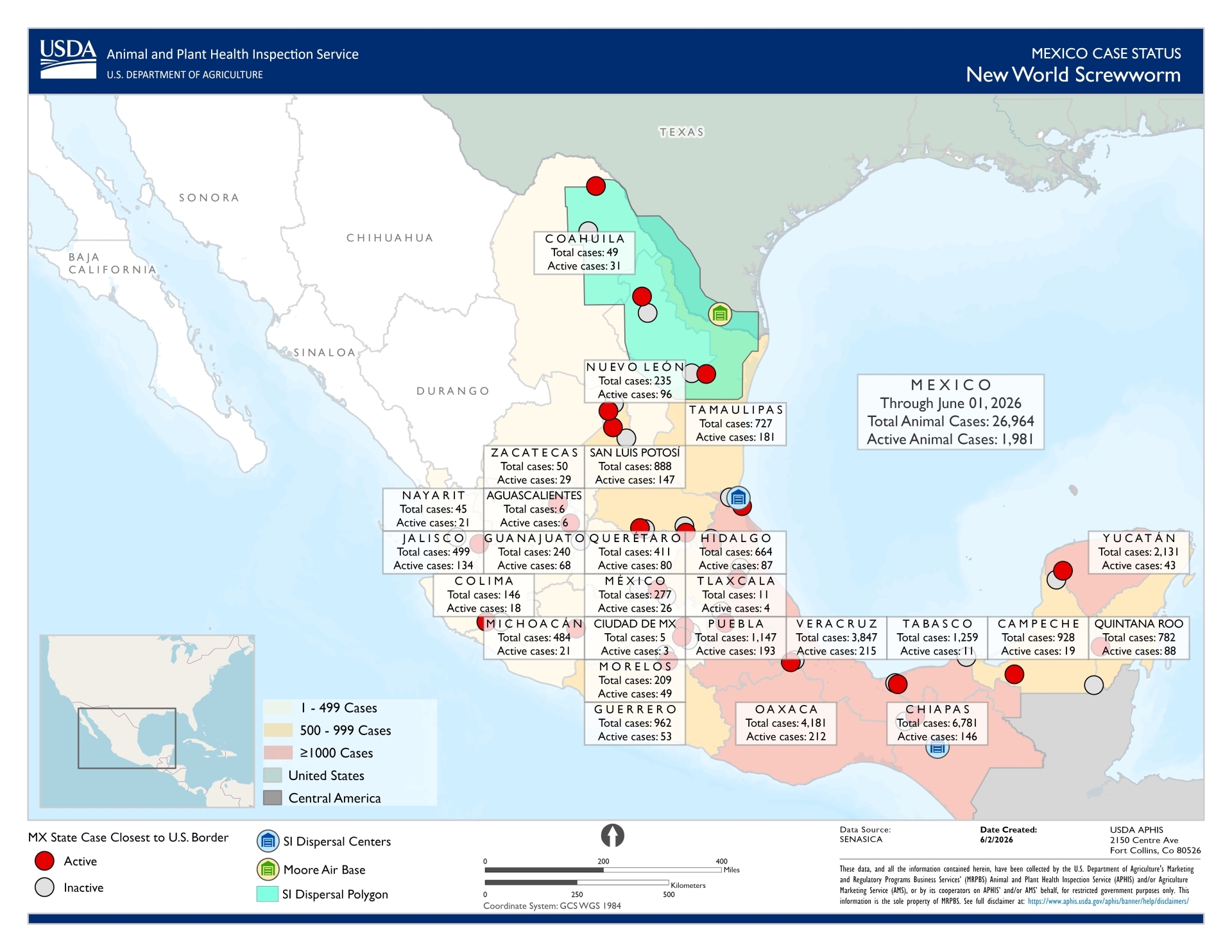
Most Recent Map of NWS Outbreak courtesy of USDA - Click for larger view
Scaling the Sterile Fly Response
To counter this northern advance, the USDA is actively executing a multi-pronged containment strategy to scale up sterile insect production.
The long-term objective centers on a domestic sterile insect rearing facility at Moore Air Base in South Texas. Once fully operational, this facility will allow the United States to produce 300 million sterile flies per week to protect the border.
Because this domestic rearing facility has an estimated construction timeline of three years, the government is also funding faster regional interventions. The USDA recently directed a 21 million dollar investment into Mexico to renovate an existing production facility in Metapa.
With a much quicker 18-month turnaround, this international upgrade will inject an additional 60 to 100 million sterile flies per week into the containment effort.
The Hunter’s Action Plan
Government agencies have established a quarantine zone around the Texas case, but hunters remain a key source of eyes and ears in the field.
The U.S. Department of Agriculture outlines a very specific protocol for handling suspected cases in the field:
Watch for the Signs: Look for live or recently dead animals with deep wounds, bloody discharge, and a foul odor. Affected wildlife will often appear in pain, lethargic, or severely aggravated.
Record the Location: Note your exact coordinates using a GPS device or a mapping application.
Document the Wound: Take clear photos or videos of the wounds and the visible larvae if you can safely do so.
Do Not Handle the Animal: Do not attempt to touch, harvest, or transport the animal across property lines.
Report Immediately: Call the local USDA Wildlife Services office immediately at 866-4USDA-WS (866-487-3297) to report the encounter.
Ventral view of NWS larva, highlighting the mandibles on the anterior end of the body. Photo courtesy of CDC
Hunters should also take steps to protect themselves and their hunting dogs while in the field.
Make sure all personal wounds are clean and completely covered before heading into the brush.
Use an EPA-registered insect repellent and wear clothing treated with 0.5% permethrin.
Always check your harvested animals, your dogs, and yourself for larvae after spending time in the woods.
The USDA has even created an information sheet specifically geared to hunters.
Final Thoughts
While it is important not to over-sensationalize these reports, NWS is a situation that hunters across the country should keep an eye on.
Those in Texas and the southern states should be more vigilant, keeping a close eye on your local herds and utilizing the proper reporting channels if something looks out of place.
In the meantime, the rest of us can stay focused on preparing our gear for the fall, and perhaps start assembling our flamethrowers just in case.
A Full-Time Marketing Manager at Bowhunting.com and Rhino Group, Mike is an avid outdoorsman, videographer, and photographer living in Northern Minnesota on the edge of the Boundary Waters Canoe Area Wilderness with his wife and son.