Whether you’re a weekend warrior with precious little time to hunt or someone who can jump in a tree at a moment’s notice, now is the time to pull out all the stops. The rut is here.
The rut requires some strategy, but above all, it requires patience and mental fortitude. Seasoned hunters know an entire fall can change in a few seconds. When you can climb into a tree during the rut, here are the top tactics you need to know.
Tree Time
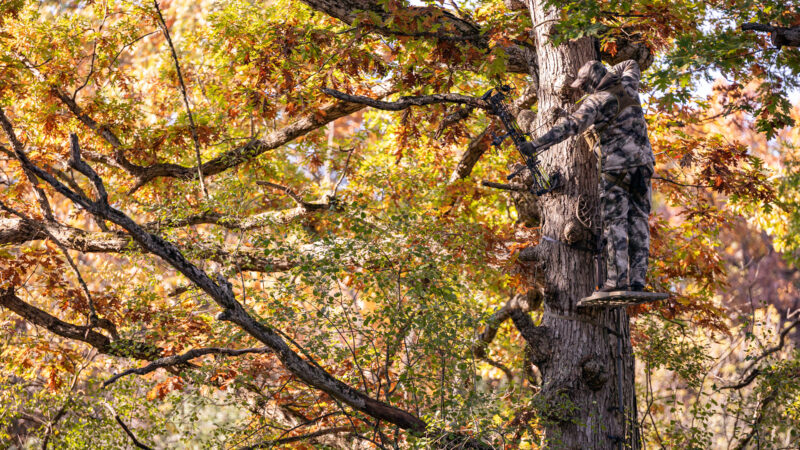
Before I get into too many specific strategies and ways to meet up with your target buck, I am a firm believer that above all else, time in your tree stand trumps everything. You have to put in the time to be successful year after year during the rut.
All the top TV show celebrity hunters find and acquire diversified hunting spots, but they also log countless hours in the tree and may not kill their target deer until 30 or 40 sits into the season.
So, take the following strategies and try to apply a few of them to your situation, but understand that time on stand is critical. It’s like a basketball team with a high 3 pt. percentage – keep taking your shots, and eventually they’ll start falling, and good things will happen.
Hunt All Day
I am a big proponent of the all-day sit in one tree. If you’ve hunted for any length of time, you know things go from zero to sixty in a heartbeat, and you have to be ready to draw and make a shot in the midst of chaos.
If you have a few locations where you’ve tried all-day sits and simply don’t see deer during one portion of the day, you should probably move stands to improve your afternoon or morning odds.
To get through an all-day sit, stuff your pack full of all the food and drink you need to mentally get through it. If you just can’t sit in one spot all day, get down and change stands if you need to. To stay focused, set the phone down for periods at a time and come up with a pattern of scanning the woods.
When using my cell phone on a stand, I sometimes prefer to make a phone call from the woods over a long text message. I can whisper and talk on the phone and still scan the woods and immediately hang up and be ready to shoot more readily than if I’m texting.
Sitting all day isn’t for everyone, but if you only have a certain number of vacation days to be in a tree, make them count and log the hours when you can.
Use the Lay of the Land
In a very modern, mobile hunting world, this may not sound like the advice you’ve been hearing from YouTube channels or podcasts – but finding a tried-and-true rut location and sticking to it works more times than not.
If you have the right access and all the in-person and trail cam data tells you deer are there on a prime rut funnel or bedding area, why change? Don’t sit somewhere else just because you think you need to kill a deer in a different location. Bowhunting is hard. Kill them when you can, where you can.
Of course, this is a different story on public land. Sometimes you have to go mobile, travel deeper, and move around humans to figure out where the deer are spending time. This usually requires a mobile setup like a saddle or lightweight hang-on with climbing sticks.
Impassable terrain and land features like steep bluffs, waterways and terrain bottlenecks can put a deer right in your lap at odd times of the day during the rut. Steep hill country creates amazing rut funnels where bucks cruise from one bedding area to another.
There will be trails just above and below steep drainages or ditches where the terrain flattens out again. Hunting around these ditches can create great funnels, but be careful with swirly winds down low. Terrain saddles and other dips or bends in hill country terrain are key areas to set up for morning hunts where your thermals will be rising above them and bucks will be cruising.
In hill country, I find that bucks like to walk back uphill in the mornings because thermals are still falling downhill – right into their nose. By walking uphill before light, they can scent check anything up on the ridges.
For morning hunts, I try to access stands away from thermal hub collection areas. These collection areas are low points in fields or ‘bowls’ where thermals drop and cool air collects overnight. These are pre-daylight socialization hotspots during the rut, so I try to avoid walking through them at all costs.
Natural crossings caused by creeks or pond edges can be excellent rut-hunting locations. Large oxbow curves in rivers can create excellent bedding areas. From there, hunt where the river or other terrain funnels deer.
On flatter ground, try to mow trail systems where you want deer to go. Creating a trail system through something like a tall grassy river bottom can be one of the best things you can do for your property to predict rut travel.
Wind and Thermals
The easiest way to mess up a day of rut hunting is to not pay attention to where your wind is blowing. Just because deer are running all over doesn’t mean they aren’t using their instincts. Play the wind.
I try to offset myself to where deer can quarter into the wind slightly, but have my setup be just outside of where they are passing through. This is easier to accomplish in hill country, where you can pair wind direction next to areas where they can’t travel due to terrain.
I value morning hunts during the rut over evening hunts for a few reasons. The first is thermals. You’ll notice a lot of times the winds don’t pick up and take hold for the day until around 90 minutes after daylight.
This means you’re only dealing with rising thermals after the sun is up. If you can position yourself well above the deer while thermals are rising, you can get away with a lot during early morning hunts.
This can be critical information to know because if you have a deer passing by a stand within the first 90 minutes of light, and you know winds don’t pick up until around 8:00 or 8:30am, all you need to account for is thermals.
The second reason I value mornings over evenings is because I don’t have a huntable destination food that is easily accessible or secluded to see enough daylight movement.
Find what time of day your land is hot, play the wind and thermals, and plan hunts around those times.
Calling
Calling can be extremely effective during the rut if you catch a buck in the right mood at the right time. I always have my grunt call with me when hunting, no matter the time of year.
Short 30-second rattling sequences can be effective due to your ability to put sound where a grunt tube can’t quite reach. If a buck doesn’t come in immediately, they may swing well downwind of you and never make their presence known.
If you see a deer traveling in a different direction, throw a grunt its direction. If he stops, grunt once more and then let it sit. He may charge in looking for an intruder, or he may walk off but return within 30 minutes to check things out if he’s in a cautious mood. Put the calls down and immediately get ready to shoot after you rattle or grunt.
Scents
Estrous and dominant buck scents during the rut can be placed in mock or real scrapes, or used on a drag on the way to your stand. If using a drag, string along the drag a few feet off your walking trail so a deer isn’t smelling you and your estrous scent.
During the rut, I will usually put some sort of deer urine scent under a mock scrape near my stand or on the side of the tree. Not only could it create curiosity, but it could act as a little cover scent too.
Watch Trail Cameras
Trail camera movement can be very sporadic during the rut. During peak chasing, I tend to get fewer photos. I think its because bucks take odd routes and run perpendicular to a lot of doe travel to scent check efficiently. This doesn’t take them past many of my trail camera setups.
If a certain buck is showing up consistently during the rut, he is running all over that property. If he isn’t showing – that doesn’t mean he isn’t there. Trail cameras don’t lie, but they hardly tell the whole story. Certainly, use the information they provide, but chasing your tail, only hunting off-trail camera information, can be frustrating.
Final Thoughts
In the end, success during the rut comes down to hunting your best spots intelligently. Know the land, how deer move, and the most recent intel from scouting and trail cams and you just might punch a tag on a big buck this season.