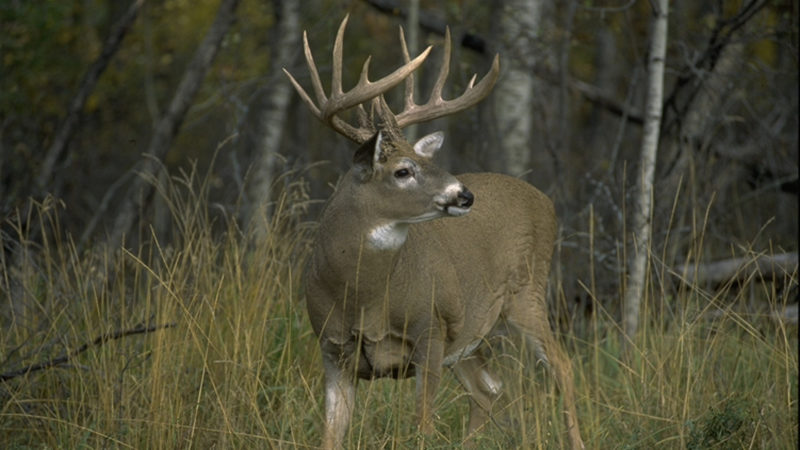
It wasn’t long ago that news outlets raised the question, “Where will Omicron show up next?” Little did they know it would soon be found in the white-tailed deer.
The coronavirus did show up last fall in whitetail deer. However, recent findings in a New York study revealed that the Omicron variant has found its way to the whitetail as well.
Is the coronavirus in deer an issue that should concern hunters?
Blood and nasal swab samples taken from captured deer on New York’s Staten Island revealed that nearly 15% had virus antibodies. With 131 deer tested, the finding suggested that the animals had previous coronavirus infections and were vulnerable to repeated reinfections with new variants, according to researchers led by Pennsylvania State University scientists.
“Circulation of the virus in an animal population always raises the possibility of getting back to humans, but more importantly it provides more opportunities for the virus to evolve into novel variants,” said Suresh Kuchipudi, a Penn State veterinary microbiologist.
So what’s to come in the days ahead?
“When the virus completely mutates, then it can escape the protection of the current vaccine. So we’d have to change the vaccine again,” Kuchipudi said.
Can the coronavirus be spread from deer to humans?
How were deer infected with omicron?
Most theories point to humans as the beginning point for virus transfer.
A Reuters report says one theory is that deer came into direct contact with humans, who likely got close to them, fed them, and caught the virus. Another is that deer interacted with other animals such as cats that were infected with COVID from humans.
Studies also show that wastewater is another means of transmission.
“The theory that I find most plausible is that we know that at least elements of the virus are shed in wastewater,” says Dr. Samantha Wisley, a professor of wildlife ecology at the University of Florida Institute of Food and Agricultural Services. “So, people are either urinating or defecating out the virus. What we haven’t seen is if that virus is still alive or able to infect other things; I don’t believe that’s been proven. But, at the same time, that would make a lot of sense that wastewater might be the way that it’s getting from humans to wildfire, particularly deer.”
At this point, studies indicate that deer can spread the virus to other deer, but the virus has not been spread back to humans.
Brodie Swisher is a world champion game caller, outdoor writer, seminar speaker and Editor for Bowhunting.com. Brodie and his family live in the Kentucky Lake area of west Tennessee.