Can Michigan Save Its Deer Herd?
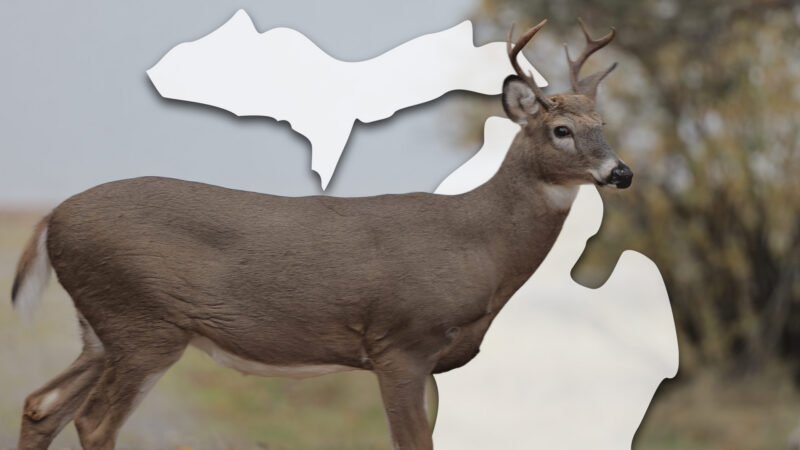
There’s a big debate going on in Michigan, as they look to drop from a two-buck, to a one-buck state.
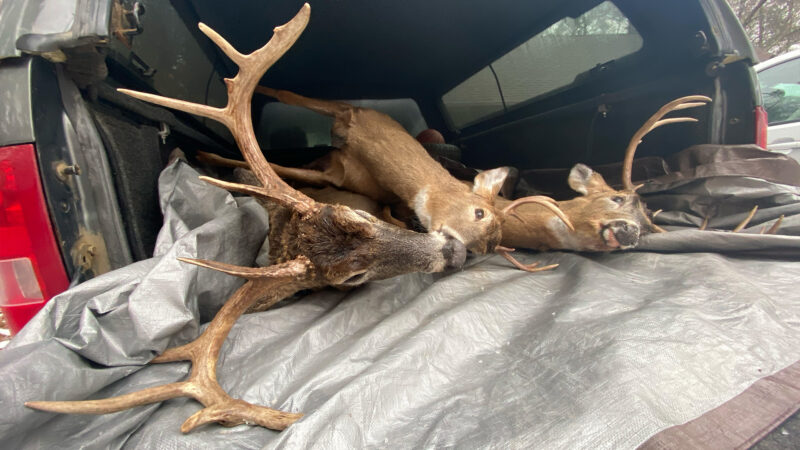
A hunter sitting with two buck tags in their pocket behaves differently than a hunter with one. This “second tag” psychology has defined Michigan hunting for decades, often leading hunters to be less restrictive with their first buck. This safety net has helped create a culture where the harvest of antlered bucks consistently outpaces the harvest of does.
The Michigan DNR is hoping to change that.
During the latest Natural Resources Commission (NRC) meeting, the data suggested that this historical “mulligan” mentality has reached a breaking point with approximately 80% of Michigan deer hunters not harvesting a single antlerless deer in a given year.
The State of the State
In Michigan, the total state harvest ratio sits near 0.9 does per 1 buck, and in the Upper Peninsula, that number has dropped as low as 0.2 does per 1 buck in certain seasons. Over the past five years, Michigan hunters have harvested an average of 52,000 more bucks than does annually.
About 6.8% of hunters (roughly 41,000 people) tag out on two bucks. These hunters alone harvest approximately 82,000 bucks, which is more than the total buck harvest of the entire state of Indiana.
Michigan currently leads the Midwest in hunter density, with roughly 10.7 hunters per square mile, far outpacing the regional average of 4.9 and more than triple the density of Iowa. “What we need for management is often different than what people prefer for their recreation,” noted MI DNR Deer, Elk, and Moose Management Specialist Brent Rudolph.
Rudolph admitted that simply giving hunters more tags (up to 10 antlerless) didn’t work:
“Having universal antlerless licenses available… has not dramatically increased harvest. It’s not gotten our harvests back to the historic high levels of the late 90s and early 2000s, and it’s really not done a whole lot to increase our take per hunter.
…it’s simply not keeping up with what we think is needed for management”
-Brent Rudolph, MI DNR
The DNR’s One Buck Recommendation
The Michigan Department of Natural Resources (DNR) is not currently proposing a mandatory “Earn-a-Buck” program. Instead, the department is recommending a “landscape-level nudge” designed to shift hunter behavior through license restructuring.
The One-Buck Rule (Proposed for 2027):
- Lower Peninsula: The “Single Deer License” would transition to antlerless only. To hunt a buck, a hunter would purchase the Combo License, which would be limited to one buck and one doe.
- Upper Peninsula: The restricted tag on the combo license would transition to antlerless-only in most units, though the single license would still allow for the harvest of one buck.
The goal is to put an antlerless tag in every pocket. The DNR is betting that if a hunter has a doe tag and only one buck tag, the incentive to shoot a doe will increase.
Data supports that single buck tags can enhance age structure as well. Hunters with only one buck tag shoot 60% mature bucks (4 points on a side), while those with two tags shoot only 43%.
Beyond the One-Buck Rule
The DNR also addressed other levers in the toolbox. Rudolph discussed regional antler-point restrictions (APRs) with 3-point and 4-point tiers, noting they are popular for satisfaction but carry concerns regarding Chronic Wasting Disease (CWD) and Bovine TB, as mature males are primary carriers.
Perhaps the biggest “sleeper” change is the late season. The DNR recommends shortening the muzzleloader season to just three days and renaming it the “December Firearm Season.” By allowing “any legal firearm” in the Lower Peninsula for those three days, the state hopes to pivot late-season pressure away from bucks and toward a final, aggressive doe harvest.
Interestingly, the highly-requested “Earn-a-Buck” program was rejected. Not for biological reasons, but because of a $1 million bureaucratic hurdle. The state’s licensing system is essentially a relic, and rewriting the code to verify a doe harvest before allowing a buck purchase would take five years and a legislative overhaul.
A Generational Plea for Stewardship
The meeting shifted from data to legacy when public comments began. Jordan Hoover provided a testimony that transcended simple regulation changes, speaking instead about a 30-year-old dream that started with his father.
“My father was a tremendous hunter, dedicated conservationist, and outspoken advocate for change in Michigan deer management. He believed the duty of stewardship extended beyond the woods and waters we loved.
Stewardship is an action word. My father once stood alone in this room in his fight for a one buck system. But I do not stand before you alone today… Michigan’s comeback story begins in ’26 with one buck.”
-Jordan Hoover
Hoover’s testimony reflects a growing movement of younger hunters who prioritize the health of the resource over the traditional “meat and horns” mentality. This push for immediate accountability was amplified by Josh Arbogast, who pointed to Michigan’s struggling reputation among its Midwestern neighbors.
“Michigan has gained a reputation as the worst whitetail managed state in the Midwest, but this commission has the opportunity to turn that around… 2027 isn’t a plan. It’s a delay. And when things get delayed, it dies on the clock. You don’t need more time. You need conviction.”
-Josh Arbogast
The Defense of Tradition
Conversely, many hunters see mandatory APRs and tag limits as an attack on heritage. For these hunters, the “two-buck tradition” represents American freedom and a family way of life. Mike Thorman spoke on behalf of hunters who feel the sport is being overtaken by a focus on “inches and antlers.”
“Of the two bucks taken on my farm last year, one was taken by my grandson. It was a small six-point and at that moment, he was the happiest kid alive. I think that will make him a lifelong hunter. The second was taken by my veteran disabled brother; it was a four-point, and it might be his last deer ever. Are you really going to take these treasured memories away with APR’s so a few can brag about how big a buck they shot”
-Mike Thorman
This perspective fears that the “Average Joe” who has limited time to hunt will be pushed out of the woods by elitist standards. It is a cultural friction that the NRC must resolve if it hopes to stem the 31% decline in hunter numbers Michigan has seen since 1995.
The Complications of Change
The debate is messy because Michigan is messy. You have agricultural paradise in the south and snow-choked wilderness in the north. A “broad brush” regulation like the One-Buck Rule is bound to miss the mark in certain DMUs.
There is also the financial risk. The DNR expects a hit of over $1 million in license revenue as hunters pivot away from the combo tag. In a state already losing 1% of its hunters annually, every dollar and every participant counts.
There were those who voiced concerns that the proposed changes should not be delayed and take effect in 2026, not the proposed 2027. The DNR is hesitant of the earlier implementation primarily because some license sales for the 2026 season have already started.
Looking Ahead to May
The NRC is expected to vote on these guidelines on May 13th. This decision will define the direction of Michigan hunting for the next decade. Whether the answer is a one-buck rule, regional APRs, or a complete overhaul of the muzzleloader season, the period of “kicking the can down the road” appears to be over.