Understand why your “Maximum Range” is a moving target.
How far are you willing to shoot at a whitetail?
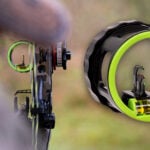
Modern compound bows are engineering marvels, with high-speed cams, precision machining, and adjustable sights making 80-yard shots more achievable than ever. However, just because the equipment is capable of that distance does not mean we should be taking those shots on a live animal.
Your “max range” is not a fixed number on your sight tape. It is a sliding scale that resets every season, every day, and every time a deer steps into a shooting lane. To find your true limit, you have to weigh your technical confidence and situational constraints, against your own personal ethics.
Author’s note: For purposes of this article, we are talking about hunting whitetails in the Midwest. Western game and hunting situations call for their own assessment.
Part 1: Technical Proficiency (Shot Confidence)
Not everyone has the same natural ability or the high-end gear that makes long-range proficiency accessible. Every archer starts with a different baseline skill set.
On top of your raw ability, you have to account for your practice frequency. Some years, I’ve been able to shoot every single day, and my confidence and ability skyrocket. Other years, life simply gets in the way.
When practice sessions are few and far between, we have to take an honest look in the mirror and likely reduce your max range by 5 or 10 yards, or even more.
Finally, consider the Vitals Window. A broadside, calm deer offers the largest possible target. The moment that deer quarters away, your “ethical target” shrinks significantly. Your confidence must be high enough to hit that new, smaller window, or you shouldn’t be letting the arrow fly.
Part 2: Reality Check (Situational Factors)
Even if you’re a world-class target shooter, the reality is that you are shooting at a dynamic target. In the deer woods, it isn’t just about your form; it’s about a dozen external variables that can change the flight of your arrow—or the position of the target—before impact.
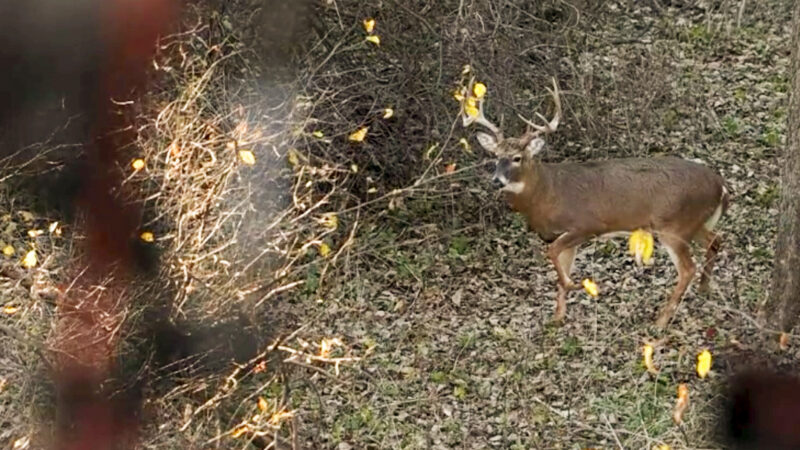
Deer Behavior: An alert deer is a dangerous target, and is likely to move at the shot. But even a perfectly calm deer at further distances can take a single step during the time it takes for your arrow to arrive, turning a lung shot into a gut shot.
Environmental Factors: Wind and rain don’t just make the hunt more difficult; they physically change the dynamics of your arrow flight. A stiff crosswind can drift a broadhead several inches off course at longer ranges.
Shooting Lanes: You have to be realistic about what is between you and the animal. A wide-open 30-yard lane might be a green light, but that small gap in the branches over your shoulder might make for a no go.
Shot Position: Are you standing comfortably on a platform, or are you in a saddle, twisted on one leg, wrapping around a tree trunk? If your physical position is compromised, your max distance must be too.
Taking these factors into consideration could lead to significant reduction in how far you should be willing to comfortably shoot at a whitetail.
“I take archery very, very seriously… Body language is everything: Are the ears down or twitching? Where are they looking? What are they paying attention to? … All those variables come into play.”
-Joel Burham, Whitetail Fit
Part 3: An Inconvenient Question
Bowhunting is a game of inches and percentages. Every hunter, at some point, has to look in the mirror and ask: “Are you okay with possibly wounding this animal?” But, if we are being honest, we know that many hunters will take a much riskier shot on a giant buck than they ever would on a doe or a smaller buck.
While there are certainly times or hunts when I’m not going to shoot a doe but would shoot a buck, those are based on other factors. I don’t think your max distance should be determined by the perceived quality of the animal.
See what folks had to say when we asked them how far bowhunters should be shooting at whitetails in the videos below:
Part 4: The Strategy (The Max of My Max)
My personal strategy for the season is simple: I establish my “Absolute Max” for the season. This is my technical limit under perfect conditions: the deer is dead calm and broadside, there is zero wind, I have a clear lane, and I’m in a steady position.
For me, that has ranged from 30 to 45 yards depending on the year, how much I’ve practiced and how well my current setup is shooting for me.
I will never shoot past that number, period.
But on every single hunt, I assess how much shorter that distance needs to be based on the variables of the day. By the time a deer actually steps out, my “max” for that specific moment might only be 20 yards. This is a constant internal dialogue that stays on top of my mind from the moment I climb the tree.
“90% of my bucks have been taken at 20, 25, 30. The only long shots are out West. A whitetail is too unpredictable to really shoot past 40 or 50.”
-Chris Bee, BeeReal Custom
Final Thoughts:
One of the main reasons I got into bowhunting was for the challenge, not only of shooting archery equipment, but also of a much more intimate pursuit of game. Testing my knowledge of whitetails, my ability to move undetected, and fool their senses at close range.
If you want to be a sniper, buy a rifle. If you want to be a bowhunter, then get in close.
A Full-Time Marketing Manager at Bowhunting.com and Rhino Group, Mike is an avid outdoorsman, videographer, and photographer living in Northern Minnesota on the edge of the Boundary Waters Canoe Area Wilderness with his wife and son.