For many deer hunters, few things get the adrenaline pumping like calling to a buck and getting a response.
Whether it’s a grunt, bleat, or rattling sequence, calling deer adds an exciting, interactive element to the hunt. When done right, it can pull a buck in on a string.
But when done wrong, it can spook him straight out of your life. The difference between success and failure often comes down to subtle mistakes — small errors that separate seasoned deer callers from the rest of the pack.
Here are the five biggest mistakes hunters make when calling deer — and how to fix them.
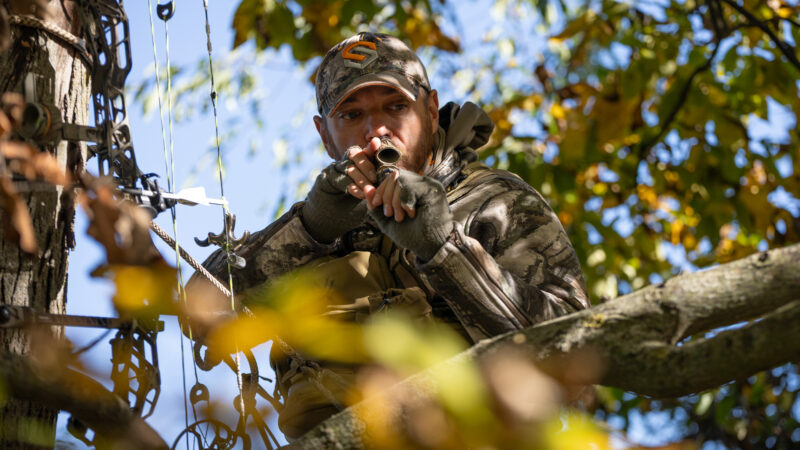
1. Calling Too Loud
One of the most common mistakes hunters make is being too aggressive with the volume of their calls. It’s easy to get caught up in the moment and blast a series of loud grunts or rattles across the woods, but remember: deer have incredible hearing.
What sounds natural to you, is not likely to be the case for a deer in the distance. Don’t blow them out from the start.
When calling deer, start soft. If nothing responds, gradually increase your volume. Think of it like easing into a conversation — not shouting across the room.
In tight cover or calm conditions, soft grunts and light tickling of the antlers often work best. Save the loud, aggressive sequences for windy days, open terrain, or the heart of the rut when bucks are fired up and covering ground.
2. Not Calling Loud Enough
On the flip side, many hunters make the mistake of not calling loud enough. Deer can cover a lot of ground during the rut, and if your calls don’t reach their ears, you’ve already lost the game.
This is especially true in windy conditions or areas with thick foliage where sound doesn’t travel well.
If you’re set up in an open field edge, a ridge top, or during high wind, don’t be afraid to crank up the volume a bit. Use a call that projects — like a high-volume grunt tube, big antlers, or rattling device with a solid tone.
The key is to match your call’s intensity to the conditions. You want your call to carry, but not sound forced or unnatural.
3. Not Being Realistic in Your Calling
Realism is everything when calling deer. A sequence that sounds mechanical or overdone will raise red flags faster than you can hang up your grunt tube.
Bucks are used to hearing the natural cadence and tone of other deer — subtle grunts, pauses, and movement sounds that accompany real-life behavior.
To sound realistic, mix in pauses and variations. Don’t call in perfect, repetitive patterns. If you’re rattling, add realism by scraping your antlers on the ground or breaking a few sticks to simulate movement.
When grunting, imagine what a real buck might sound like — short, soft grunts spaced out with natural rhythm. Avoid the “machine gun grunt” syndrome that screams “hunter” instead of “buck.”
4. Not Calling at the Right Time
Timing is everything in deer calling, and this is where many hunters blow their chances. The most common timing mistakes fall into three categories:
Calling too soon: If you see a deer that’s still far away and not committed, calling too early can make him pinpoint your location before he’s in range. Let the deer move naturally until you need to influence his direction.
Calling too late: If a deer is walking away and you wait too long to call, he may be out of earshot. Don’t be afraid to make a move when he’s still within range to hear and respond.
Calling when a deer is already headed your way: This one is tough. Many hunters can’t resist the urge to call when they see a deer coming in. But once a buck is committed and closing the distance, keep quiet. Calling at this point can make him stop, hang up, or even circle downwind to verify what he heard.
The best deer callers read body language, wind direction, and distance before they ever touch a call. Patience and timing separate the pros from the rest.
5. Not Keeping Calls Handy and Accessible
It’s a small detail — until it costs you a buck. Too many hunters have their grunt tube stuffed in a backpack or hanging out of reach when they suddenly spot a deer moving through. By the time they fumble around and find it, the opportunity has passed.
Keep your calls where you can grab them quietly and quickly. Keep your grunt call hanging on a lanyard around your neck or gear hanger. Make sure your rattling antlers are within arm’s reach.
In a ground blind, set your calls on a small shelf or stool next to you. The faster and quieter you can react, the more natural and effective your calling will be.
Final Thoughts
Calling deer isn’t about showing off your best grunt sequence or rattling routine — it’s about communication. You’re trying to talk to deer in their own language, and that takes finesse, timing, and realism. Avoid these five common mistakes, and you’ll quickly see the difference in how deer respond.
Sometimes, all it takes is one perfectly timed grunt or a realistic rattling session to turn a slow morning into the hunt of a lifetime. Stay subtle, stay smart, and keep your calls close.