When the early season arrives, bowhunters often find themselves competing with the abundance of natural food sources available to deer during the first few weeks and months as the hunting season kicks off.
Unlike late season, when deer are driven to concentrate on limited food options, September and October offer a wide variety of choices.
Understanding which food whitetails prefer during this time can help hunters key in on the most productive areas to set stands and ambush their target buck.
Acorns
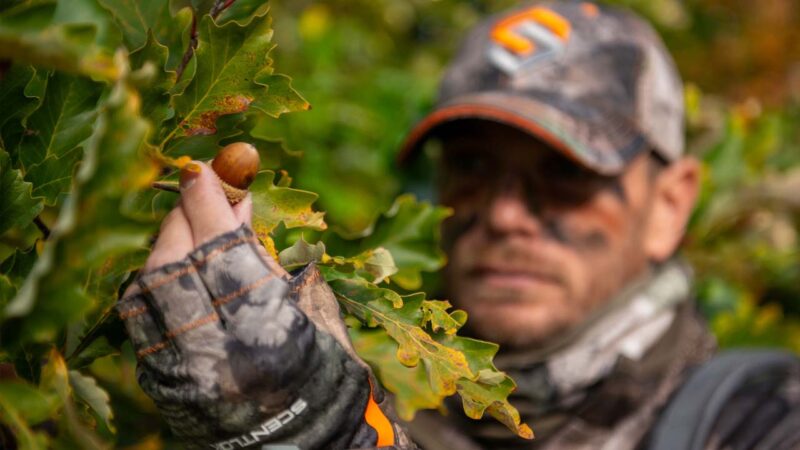
No surprise to find this food source at the top of our list. Few natural food sources draw deer more powerfully than acorns. Oaks—both white and red—drop their nuts at different times, but when they first hit the ground, deer quickly zero in.
White oak acorns are often the top choice due to their lower tannin levels, giving them a sweeter taste. When acorns begin to fall, bedding and travel patterns can shift almost overnight.
Hunters who scout oak flats, ridges, and the edges of fields with producing trees often find early-season success. Pay close attention to fresh sign—tracks, droppings, and chewed caps—indicating that deer are actively feeding there.
Remember, not just any oak will do. You’ve got to find the tree that deer are feeding on right now.
Apples
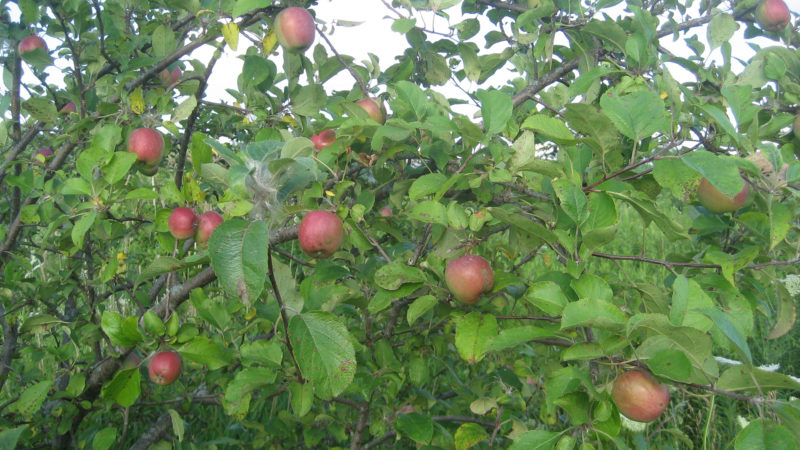
If there’s an apple tree on your hunting property, you’ve got a hotspot. Apples provide a sugary food source that deer can’t resist, especially when the fruit first begins to drop.
Unlike acorns, which are widespread, apple trees are often isolated or grow in clusters, creating highly concentrated feeding sites. Deer will visit these areas repeatedly until the apples are gone.
The key is to strike quickly, because apples rot fast or get cleaned up by wildlife in short order. Setting a stand downwind of an apple tree can put you in a prime position for an early-season encounter.
You’ll often find apple trees around an old or abandoned farm or homeplace.
Persimmons
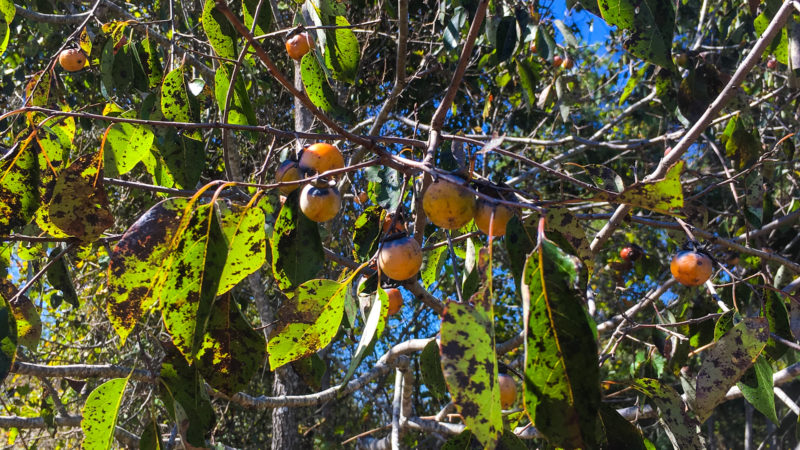
Persimmons ripen later than some other early-season foods, typically starting in late September and into October, depending on the region. These soft, sweet fruits are like candy to deer, and when they begin falling, whitetails will often go out of their way to feed on them.
Persimmon trees are more common in southern states but can be found in pockets throughout much of the country. Keep in mind, coyotes and coons love persimmons as well. The fruit won’t last long on the ground.
And because the fruit doesn’t last long after hitting the ground, timing is everything for making your opportunity happen.
If you know of a producing tree, keep close tabs on it and move in as soon as the fruit starts dropping.
Ag Fields - Beans and Corn
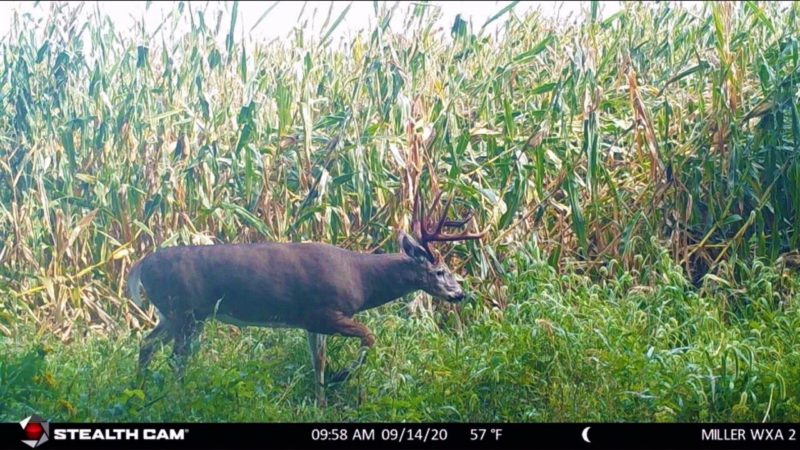
While most crops like acorns and persimmons are critical, agricultural fields shouldn’t be overlooked in the early season. Green soybean fields are a favorite, with deer feeding heavily on the lush, high-protein leaves before they yellow.
Corn also provides a dual attraction—green stalks early, then ears later in the season. Hunters who glass fields in late summer and early fall often identify patterns that can be exploited in September and October.
Look for staging areas between bedding and ag fields to intercept deer before they make their way into these wide-open destination food sources.
Browse and Forbs
Even with all the attractive mast crops, don’t forget that deer are browsers by nature. They will readily feed on young green shoots, forbs, and woody browse, especially in areas recovering from logging, fire, or disturbance.
Clear-cuts and new growth areas can be magnets during early fall. While not as concentrated as an apple tree or oak flat, these areas provide consistent, everyday food that helps keep deer close.
Final Thoughts
Early-season deer hunting is all about timing. Food sources are diverse and often short-lived, so hunters need to be flexible and responsive.
Acorns may pull deer deep into the timber one week, while apples or soybeans may dominate the next. Scouting is crucial—use trail cameras, glass fields, and walk ridges to identify the freshest sign and changing patterns.
By focusing on early-season food sources like acorns, apples, persimmons, and crops, hunters can set up in areas where deer are naturally moving and feeding.
With the right stand placement and attention to wind, these hotspots can make all the difference in your early-season success this fall.
Brodie Swisher is a world champion game caller, outdoor writer, seminar speaker and Editor for Bowhunting.com. Brodie and his family live in the Kentucky Lake area of west Tennessee.