For deer hunters, the act of rattling—mimicking the sound of two bucks fighting—is a time-honored and often effective technique for luring in a curious or dominant buck.
But when it comes to the tools of the trade, a key question arises: should you use real, shed antlers or their modern, synthetic counterparts? Does it really matter?
The choice between real and fake rattling antlers can be significant, but both have distinct advantages and disadvantages that depend heavily on the hunting situation and personal preference.
Sound Authenticity
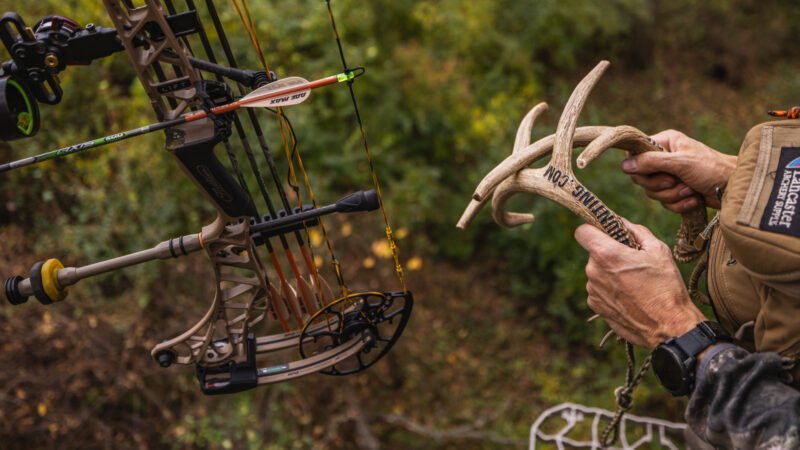
The most significant difference between real and synthetic antlers lies in the sound they produce. Real antlers, by their very nature, create a more natural and realistic sound. The hollow bone and unique texture of genuine sheds produce a wide range of tones and resonant frequencies that are difficult to replicate.
For a mature, wary buck that has heard countless real fights, this slight variation in tone can make the difference between a convincing invitation and a suspicious racket.
Synthetic antlers, while remarkably advanced, can sometimes fall short in this department. High-quality brands have worked tirelessly to mimic the authentic clatter, and many are very convincing. However, some may still have a more hollow, plastic-like tone. In areas with high hunting pressure, a buck that has been rattled to before might be able to detect this subtle lack of realism.
Durability & Convenience
When it comes to practicality, synthetic antlers have a clear advantage. Real antlers are heavy, bulky, and can be awkward to carry through the woods. They can also be brittle and are susceptible to cracking or breaking, especially in cold weather.
Synthetic antlers, on the other hand, are lightweight and designed for convenience. They are easier to pack in a bag or hang from a belt, and their durable construction makes them resistant to damage from drops, bumps, or harsh weather conditions.
For hunters who cover a lot of ground or those who want to minimize gear weight, the convenience of synthetics is a major plus.
Volume & Effectiveness
Both types of antlers can be highly effective when used correctly, but they each have unique properties regarding sound projection. Real antlers tend to have a more realistic range of sound frequencies, allowing a hunter to create everything from a soft, subtle tickle to a loud, aggressive clatter. As mentioned above, the sound is often more “spread out” and realistic.
Some synthetic antlers are specifically designed to be louder, which can be a distinct advantage in windy conditions or in open terrain where sound needs to travel a long distance.
Additionally, many synthetic models feature ergonomic grips that provide the hunter with better control over volume and rhythm, allowing for more precise rattling sequences.
Personal Preference & Hunting Style
The final decision often boils down to a hunter’s personal style and priorities. If you are a purist who prioritizes the most authentic sound possible and doesn’t mind the added weight and bulk, real antlers are a great choice. They offer a tangible connection to the deer themselves and provide a confidence boost in the realism of the call.
However, if you are a mobile hunter, a long-distance backpacker, or simply prefer a convenient and durable option, synthetic antlers are an excellent, high-performance alternative.
Their ease of use and weather resistance make them a reliable tool in any hunter’s pack. For hunting in heavily pressured areas, the slight edge in realism from real antlers may be a factor, but a well-executed sequence with synthetics can be just as effective.
Final Thoughts
Ultimately, both real and synthetic antlers can be highly effective tools for calling in deer. While real antlers may hold a slight edge in sound realism, the convenience, durability, and effectiveness of modern synthetic options make them a more than viable choice.
The most critical factor in successful rattling isn’t the material of the antlers but rather how and when you use them.
Timing, intensity, and the realism of your rattling sequence—mimicking the natural ebb and flow of a real buck fight—will always matter more than whether your antlers came from a buck or a factory.