In most sports, victories are often determined long before the opening whistle blows. The hours spent in preparation, practicing plays, refining skills, and studying opponents can have a direct and decisive impact on the final outcome.
Hunting follows the same principle. While luck can occasionally play a role – you might stumble into the woods at just the right moment during the rut and have the buck of a lifetime appear in front of you – relying on chance is not a repeatable or dependable strategy.
Consistent success in the field is earned through deliberate effort and preparation. It begins well before opening day, with time invested in scouting, studying animal behavior, tracking movement patterns, and understanding the terrain.
These foundational efforts create the conditions for opportunity and are what separate the consistently successful hunter from the occasional lucky one.
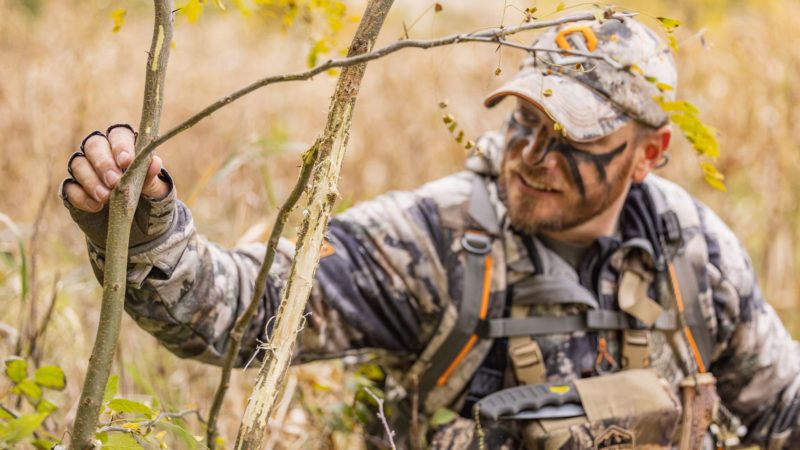
Focus Areas: Bedding, Food, and Water
Whitetail deer have an exceptional ability to adapt and thrive in a wide range of environments—from dense, remote wilderness areas to the edges of suburban neighborhoods.
Despite the diversity of these habitats, the key components that support healthy deer populations remain consistent. High-quality whitetail habitat always includes three essential elements: secure bedding areas, reliable food sources, and accessible water.
These features should be the primary focus when scouting for deer sign.
Bedding Areas
Deer prefer to bed in habitat that offers distinct advantages for survival, security, and access to resources. Bedding areas are not chosen at random; instead, deer strategically select locations that maximize cover, minimize disturbance, and provide advantageous wind and sight lines.
These choices vary notably between does and bucks, reflecting their differing priorities and behaviors, especially during hunting season.
Does, particularly those with fawns, tend to bed in areas that provide safety in numbers and proximity to food sources. Their bedding zones are often found in thicker cover closer to open feeding areas like food plots, agricultural fields, or natural browse.
Bucks, on the other hand, are far more solitary and selective in their bedding habits. Mature bucks often seek out remote, hard-to-reach terrain features such as ridgelines, points, or thick cover adjacent to terrain breaks where wind and thermal currents provide a sensory advantage.
Feeding Zones
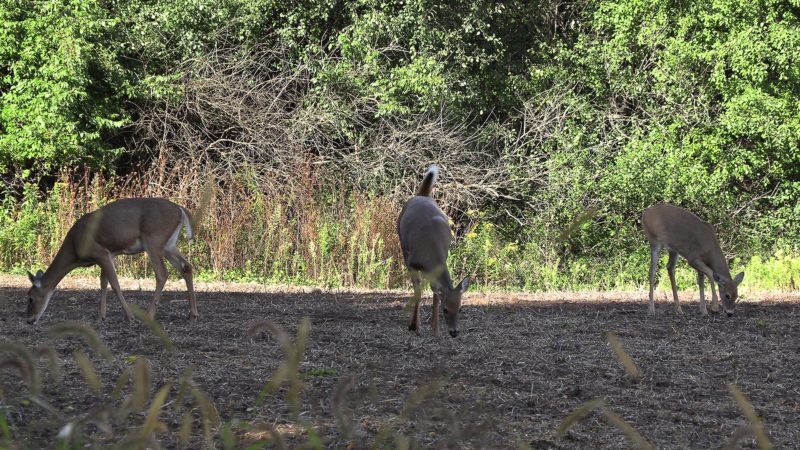
Bucks and does use feeding areas differently. While does often bed close to food sources and are more willing to enter open areas during daylight, bucks, especially in heavily hunted regions, tend to be more cautious.
A common mistake hunters make is placing too much importance on the sign found in these feeding zones, particularly early in the season or in high-pressure areas.
Their effectiveness depends on the surrounding habitat and the proximity of bedding areas. A mature buck bedded half a mile away might never reach those scrapes or rubs during legal shooting hours.
Keep in mind, food sources also change throughout the fall and winter, and deer will gravitate to wherever the food happens to be at the current moment.
Water Sources
Water sources, though sometimes overlooked, are equally important, especially in dry conditions or during early-season hunts. In my region of the country (Mid-Atlantic Region), we’ve experienced consecutive dry falls with very little rain.
This has certainly impacted how deer use the habitat. Instead of hunting high on the ridge, I’ve found it much better to focus on damp creek bottoms where the plant life is lusher and there’s a wider variety of food and water sources.
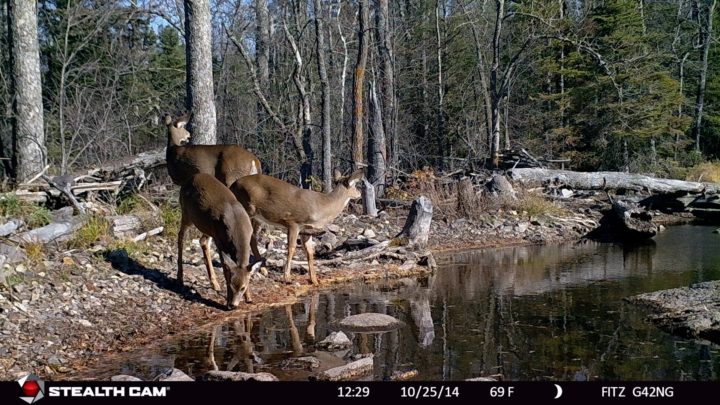
Deer don’t need to drink a ton of water because they get so much fluid from their food (preformed water), but don’t overlook the drawing power of a concentrated water source. If one is available, deer will make it part of their daily travel routine.
Utilizing Trail Cameras
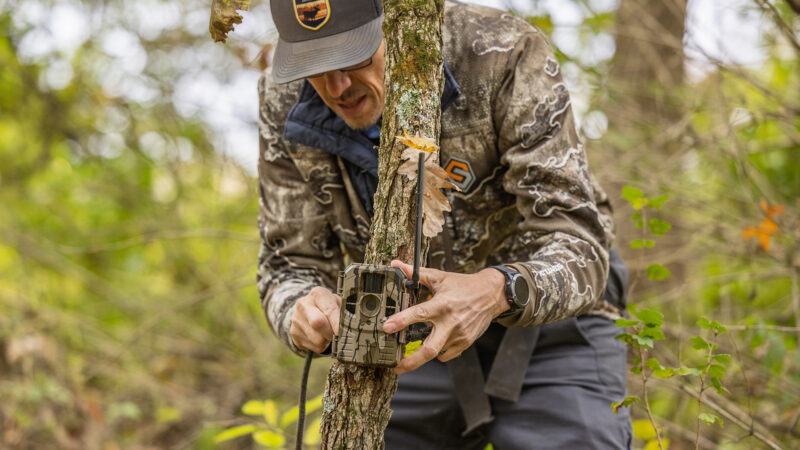
Once you have an idea where the deer are bedding, feeding, and drinking, trail cameras can be a great tool for figuring out how they’re traveling between these areas.
Place cameras in travel corridors, funnels, and food plots. Again, taking notes can be helpful here because, if you’re like me and run more than a handful of cameras, it can be hard to keep details straight.
It helps to have a few notes I can access on my phone or in the notes section of an app, so I can quickly glance through log history of a particular waypoint.
Trail cameras are most effective when used tactically, to pinpoint movement in specific funnels or pinch points, or to get a better understanding of when deer are using a food plot or other food source.
Reading and Understanding Sign
While cameras are undeniably useful tools, there’s a tendency to become overly focused on capturing images of a specific buck, often at the expense of reading the broader story the woods are telling. In doing so, hunters may overlook valuable clues that lie just outside the camera’s frame.
The reality is that trail cameras only reveal a portion of the picture. They can’t detect subtle patterns, changing behaviors, or environmental shifts the way a skilled observer can.
This is where good old-fashioned woodsmanship becomes invaluable.
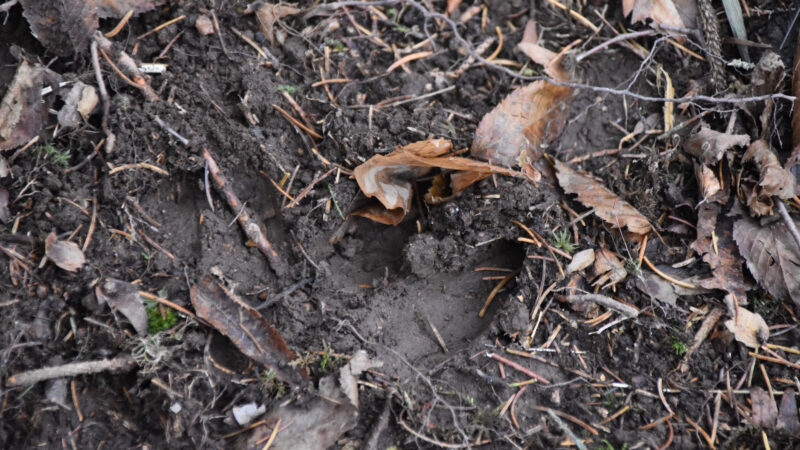
A trail that’s been used for years can suddenly become irrelevant, and without close observation, it’s easy to miss the shift. When it comes to reading and understanding sign, freshness is key to understanding where deer are right now.
Mapping and Analyzing Terrain
Analyzing terrain has become my absolute favorite method for discovering promising new locations to scout and hunt. There’s something incredibly rewarding about studying topographic maps, GPS apps, and aerial imagery to identify terrain features where deer are most likely to travel or bed.
These tools offer a virtual window into the landscape, allowing me to visualize patterns and structures that influence animal movement. Every successful outing that begins with mapwork reinforces my belief in this approach.
In many ways, if you know what to look for, a map serves as a kind of cheat code. I’m especially drawn to areas where key terrain features, like ridges, saddles, or points, intersect with what’s known as “edge habitat.”

Never Stop Scouting
As discussed, change is constant in the world of whitetails. Bedding areas, food sources, and travel routes can all be impacted by seasonal shifts and availability as well as by hunting pressure and other external influences.
One of the hardest parts of bowhunting is knowing when to continue sitting in a stand and when it’s time to move on. But this is also where scouting plays such a key role in our success; scouting doesn’t stop once the season starts.
Using the scouting techniques mentioned here all season long allows me to distinguish which stands will likely produce the best results during the early season, rut, and post-rut. So my plan of attack might look something like this:
Early Season: Focus on food and water sources and predictable travel routes leading to and from known bedding areas. Hunt the first and last two hours of daylight, when deer are likely to be most active.
Avoid over-hunting stands and/or checking trail cameras too frequently. Minimize disturbances by hunting stands that can be easily accessed without alerting deer to my presence.
Pre-Rut and Rut: Target active scrape lines and brushy travel corridors. Focus on stands in travel corridors downwind of doe bedding areas, as bucks often scent-check for receptive does.
Likewise, hunt downwind of productive food sources where does are likely to congregate. Pay close attention to where terrain features and edge habitat overlap, as these will serve as natural funnels for cruising bucks. Prepare to hunt all day because a rutting buck can show up any time.
Post-Rut: The focus shifts back to winter food sources and quality bedding cover. Minimize disturbances by hunting stands that can easily accessed without alerting deer to my presence.
Although it’s possible that a mature buck could be moving throughout the day, focus hunts on the first and last two hours of daylight for best results.
Conclusion
Success in bowhunting doesn’t start when you climb into a tree stand. It begins months earlier with boots on the ground, maps in hand, and a mindset tuned to observe and adapt.
Every rub, track, and trail tells a story. If you’re willing to listen, and adjust your strategy accordingly, your chances of tagging that mature buck will grow with each season.