
Stop Chasing Ounces and Start Eliminating Problems
Scroll through social media for just a few minutes, and you’ll probably come away convinced that becoming a better mobile hunter starts with buying the latest ultralight platform, carbon climbing sticks, or another premium accessory that promises to shave a few more ounces from your setup.
Every season, manufacturers introduce lighter, smaller, and more expensive gear, leaving hunters wondering if one more purchase is all that’s standing between them and a mature buck.
I’ve fallen into that trap myself.
After several seasons of saddle hunting, I’ve realized the biggest improvements in my success had very little to do with reducing weight.
Instead, they came from eliminating the small frustrations that quietly cost opportunities, gear that rattled at the wrong moment, equipment that wasn’t positioned where I needed it, or a setup that became uncomfortable after only a couple of hours in the tree.
One hunt during the Missouri rut drove that lesson home.
After watching five does and a young buck race around beneath my tree, I knew there was a good chance a mature buck would be nearby.
About fifteen minutes later, a heavy racked buck came charging in, likely following the scent of the hot doe that had just passed through. He stopped only twelve steps from my tree, exactly the opportunity every bowhunter dreams about.
As I shifted into position, my platform failed to stay solid beneath my feet, and with limited cover around my setup, my movement was exposed. I rushed the shot, grazing the buck’s front knee instead of making a clean, ethical hit.
He stumbled briefly before stopping to stare directly at me, then bounded into the next hollow and disappeared. Thankfully, trail camera photos a month later showed he had fully recovered.
That hunt taught me something I haven’t forgotten: mobile hunting isn’t about carrying the lightest setup possible. It’s about carrying a setup that completely disappears once you leave the truck, one that’s quiet, comfortable, organized, and dependable when the moment of truth arrives.
Saving a few ounces may make the hike easier, but it rarely makes the shot easier.
The five upgrades in this article didn’t make my setup dramatically lighter. They made me a more efficient, confident, and successful mobile hunter, and none of them require chasing the latest trend.
#1- Comfort Equals Time: Eliminating Saddle Hip Pinch
A few years ago, I found myself in one of those hunts every bowhunter hopes for. The wind was perfect, acorns were raining from the oaks, and a mature buck was working the ridge below my stand.
The problem wasn’t the deer, it was me.
By the three hour mark, my hips were aching so badly that staying still had become nearly impossible. I found myself shifting my weight every few minutes, trying to find a comfortable position.
Each movement increased my chances of being spotted, and instead of focusing on the trail below, I was counting down the minutes until I could climb down. At that moment, I realized that even the best location in the woods can’t make up for a setup that keeps you from hunting effectively.
The Hype vs. Reality
The mobile hunting industry loves to market lighter saddles, but the truth is that most modern saddles are already incredibly lightweight. After all, reducing weight is one of the main reasons many hunters switch to saddle hunting in the first place.
Once you’ve reached that point, comfort becomes far more important than shaving another few ounces. A comfortable saddle allows you to stay motionless for hours, giving mature bucks the time they often need before finally making a move.
The Solution
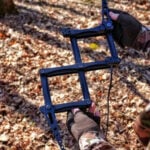
One of the most impactful upgrades I made wasn’t replacing my saddle, it was adding a simple hip pinch eliminator.

For a relatively small investment, these accessories can dramatically improve how a saddle distributes pressure across your hips. Many hunters even make their own with a 3D printer.
Regardless of whether you buy one or build one yourself, the difference can be remarkable. Instead of constantly shifting to relieve pressure, I was able to stay comfortable, remain still, and focus on the hunt rather than the discomfort.
#2- Quiet Beats Light. Every. Single. Time.
When I first started saddle hunting, I was obsessed with cutting weight from my setup. Before heading out on a two day public land hunt with a couple of good friends, I spent far too much time comparing climbing sticks that differed by only a few ounces.
Meanwhile, I completely overlooked a much bigger problem, my entire setup sounded like a toolbox every time I walked. Metal buckles clicked together, accessories knocked against each other, and loose gear shifted around inside my pack with every step.
It didn’t take long to realize those little annoyances added up. Before I ever reached my tree, I was already dealing with unnecessary distractions and frustration. Instead of enjoying the hunt and staying focused on the task at hand, I found myself constantly thinking about my gear.
That experience taught me an important lesson: eliminating noise and simplifying my setup did far more for my confidence and effectiveness than saving a few extra ounces ever could.
The Hype vs. Reality
Saving six ounces sounds impressive on paper. Yet, eliminating one metal “ting” at 4:45 a.m. is far more valuable.
A deer doesn’t care what your setup weighs, that’s for you, and only you. However, they absolutely notice unnatural noise coming from their bedroom an hour before the sun rises.
The Solution
One of the biggest upgrades you can make as a mobile hunter has nothing to do with buying new gear. It comes from paying attention to the small details.
Just as bowhunters often wrap their bows with moleskin to eliminate contact noise from arrows and accessories, mobile hunters should take the same approach with their climbing sticks, platforms, and other equipment.

Applying Stealth Strips to metal surfaces, replacing noisy hardware when possible, securing loose straps with elastic keepers, and eliminating anything that can swing, rattle, or bounce can make a tremendous difference when a mature buck slips into bow range.
Before every season, I give my entire setup a simple test.
I pack everything as if I’m heading into the woods and shake it upside down. If I hear even the slightest noise, I find the source and fix it before opening day.
My gear isn’t silent because I spent more money on it, it’s silent because I took the time to eliminate every unnecessary sound before the hunt.
#3- Organization Saves Opportunities
One October morning, I finally had a mature buck doing exactly what I had hoped he would do. As he worked his way into range, I reached for my rangefinder, only to realize it wasn’t where it should have been.
Well, it was there, just buried beneath my gloves, pull-up rope, and a couple of pockets full of gear I apparently thought I would remember organizing.
By the time I dug through everything and finally found it, the opportunity was gone. The buck had slowly worked his way out of bow range and, a short time later, disappeared completely.
It was a frustrating reminder that even the smallest details matter when a mature buck gives you only seconds to make the right decision.
The Hype vs. Reality
Hunters spend hundreds on premium packs. But very few spend time organizing the one they already own.
The Solution
In recent years, I have become obsessed with backpacks and hunting pack organization. When I prepare my pack for a hunt, every piece of gear has a specific place, and it never changes.
My release has its own dedicated pocket. My rangefinder rides in a separate attachable case, always in the same location, making it quick and easy to access from the saddle without digging through my pack. My headlamp has its own designated pocket where it stays until I am settled into my setup. It only comes out when darkness arrives and it is time to make my way back to the truck or track a blood trail after a successful shot.
The goal isn’t just having a neat pack; it’s removing unnecessary decisions in the moment. The less I have to think about where my gear is, the quieter and more efficient I can be as a hunter.
#4- My Gear Hanger Changed More Than My Gear
This was one of those small details I never thought much about until it cost me.
For years, I simply hung my gear on a screw-in style hook wherever it happened to fit once I reached hunting height. It worked well enough until I found myself needing to make a shot around the tree.
On the hunt I mentioned earlier, my shooting position was already compromised by an unstable platform. Then I realized my oversized backpack was hanging exactly where I needed room to draw my bow and maneuver.
A simple gear placement mistake turned into another obstacle during a serious moment, reminding me that every detail matters when hunting from a mobile setup.
The Hype vs. Reality
Everyone talks about platforms and climbing methods. Very few talk about where their equipment hangs once they’re actually hunting.

The Solution
Moving my gear hanger to a position where everything could be accessed naturally made a bigger difference than I expected.
I no longer have to overreach, twist awkwardly, bump my equipment, or worry about my bow limb catching on something hanging beside me. Every piece of gear is within an easy, quiet movement.
It may seem like a small adjustment, but upgrading from a simple hook I grabbed at the local lumber yard to a purpose built mobile or saddle hunting accessory strap with an integrated bow hanger completely changed my setup.
These small details help me stay more prepared and more efficient in the tree.
#5- Stop Buying Ounces, Start Building Endurance
This might be the least popular advice in the entire article. Even I struggle with reminding myself not to obsess over ounces in areas where a little extra weight doesn’t truly matter. But it has quickly become one of the lessons I believe in the most.
At one point, I found myself comparing climbing sticks that were separated by only a few ounces, searching for ways to shave weight from my setup. Then I realized something, I was spending more money trying to eliminate a few ounces instead of simply accepting that carrying a little extra weight was part of the process.
The pursuit of a lighter setup is important, but it can become a distraction. Saving weight where it matters makes sense, but not at the expense of reliability, organization, or effectiveness in the field.
The Hype vs. Reality
The hunting industry has conditioned us to believe that lighter automatically means better. In some cases, that is absolutely true.
I’m not going to pretend weight doesn’t matter, I cut my backpack and entire mobile setup from around 35 pounds down to less than 15. When you’re hiking two miles deep into public land and trying to get away from hunting pressure, cutting your load in half can make a huge difference.
But there is also a point where chasing every ounce becomes unnecessary. Most of the time, your legs won’t know the difference between carrying 19 pounds and 20 pounds.
The Solution
Instead of constantly chasing the latest lightweight gear, I started investing in the one piece of equipment that matters most, myself.
Road and trail running, strength training, and long walks with my loaded hunting pack have improved my ability to handle the woods far more than shaving a few ounces off my setup ever could.
By the time opening day arrived, carrying my gear no longer felt like a challenge. The ironic part was that once the pack stopped feeling heavy, I stopped worrying about the exact weight altogether.
Fitness became the greatest gear upgrade I ever made.
What Other Mobile Hunters Are Saying
One of the things I enjoy most about mobile hunting is that there isn’t just one right way to build a setup. There are thousands of hunters experimenting with their systems every season, and some of the best ideas come from guys who are simply out there doing it.
To better understand what truly matters to everyday mobile hunters, I wanted to hear from people who are actually putting these setups to the test. I reached out to several hunters on Instagram; not professional hunters or influencers promoting the latest gear, but regular guys who spend time chasing deer from mobile setups.
I also reached out to two close friends who played a major role in influencing my own journey into saddle hunting. These are the guys who encouraged me a few years ago to give mobile hunting a try and helped shape the way I approach my setups today.
One of those friends is Levi Rightnowar, who was instrumental in helping me get started with saddle hunting.
Levi Rightnowar: Weight Distribution Can Be Just as Important as Weight
Over the years, Levi and I have spent countless hours discussing mobile setups, gear choices, and what truly matters when you’re hunting hundreds of yards, or even miles, from the truck.
His perspective reinforced something I’ve learned throughout this process: there is no one-size-fits-all answer when it comes to building the perfect hunting setup.

What is a modification or gear swap you made that seemed minor or inexpensive but completely changed your comfort, maneuverability, or success?
Levi’s answer wasn’t a new set of climbing sticks, a lighter platform, or a different saddle. It was something much simpler, the way he packed his gear.
Through trial and error, he learned that how weight is distributed inside your pack can be just as important as the actual weight of the setup. “It doesn’t seem like it would matter because it all weighs the same, right? Wrong,” Levi explained.
After experimenting with different pack configurations, he found a way to balance the load more effectively across the entire system. The result was surprising. His setup felt several pounds lighter, even though he hadn’t removed a single piece of gear.
That small adjustment changed how willing he was to access difficult areas that he may have previously avoided because of the effort required to carry everything in and out.
That ties directly back to the message behind this article. The best upgrade isn’t always another piece of equipment. Sometimes it’s learning how to maximize the gear you already own.
Do you think counting ounces on sticks and platforms is a waste of time and money?
“I am way more likely to dive into a nasty holler where big bucks live if I don’t have a bunch of weight to take with me.”
This is where Levi and I have slightly different opinions, and I think that difference is important.
I have learned that chasing every last ounce can quickly become an expensive pursuit with minimal returns. Levi, however, hunts terrain where every pound carried into the woods matters.
“When hunting these hills in southern Missouri, every ounce makes a difference,” he said. He also acknowledged that he doesn’t train year round to maintain peak cardiovascular conditioning, which plays a role in how much weight he is willing to carry.
His thought process is simple: the lighter his setup, the more likely he is to push into the steep, difficult terrain where mature bucks often live. “I may just be lazy or weak,” he joked, “but I am way more likely to dive into a nasty holler where big bucks live if I don’t have a bunch of weight to take with me.”
And honestly, that is hard to argue with.
That is the distinction mobile hunters need to understand. Weight isn’t something to ignore; it’s something to prioritize based on your specific situation.
If you’re hiking two miles into steep, rugged terrain, cutting several pounds from your setup can have a major impact. But if you’re walking 300 yards from the truck to a tree, spending hundreds of dollars to save six ounces probably won’t change the outcome of your hunt.
If a hunter had a limited budget and wanted to improve their mobile setup, where would you tell them to spend their money and what would you tell them to avoid buying?
Once again, Levi’s answer came back to the pack. “I’d say spend your money on a good pack,” he said. “I think being able to pack everything you need efficiently is super helpful.”
He also made a point that is worth remembering: most saddles, platforms, and climbing sticks available today are quality products. They may have different designs, features, and weights, but at the end of the day, they all accomplish the same basic goal. As Levi put it, “They will all get you in a tree.”
He doesn’t have one specific piece of gear he believes every hunter should avoid. What works for one hunter may not work for another, and an accessory that seems unnecessary to one person could completely change the experience for someone else.
Something like a hip pinch reduction system is a perfect example. It has made a major difference in my own comfort, but another hunter may never feel the need for one. The best gear choices are the ones that solve the problems you personally experience in the field.
Tucker Hogshooter: Stealth and Comfort
Another hunter who played a big role in influencing me to try saddle hunting was Tucker Hogshooter.
Tucker is a Northern Missouri native who spends a lot of time chasing deer on public land, and his experience with mobile hunting has helped shape the way I approach my
own setup.

What is a modification or gear swap you made that seemed minor or inexpensive but completely changed your comfort, maneuverability, or success?
Tucker said that one of his biggest changes was switching from buckle straps to Amsteel.
“It was a simple and affordable swap, but it made a huge difference. Amsteel is extremely lightweight, incredibly strong, and eliminates the metal-on-metal noise that can ruin a quiet approach. Removing that extra noise from my setup made packing in and setting up much smoother.”
“I also started using heated socks during the winter months,” said Tucker, “They’re relatively inexpensive, especially compared to other hunting gear upgrades, but they make those brutally cold sits much more manageable. Pairing heated socks with rechargeable hand warmers has allowed me to stay comfortable longer and remain focused when temperatures drop.”
Do you think counting ounces on sticks and platforms is a waste of time and money?
Tucker says investing in lighter and more expensive gear isn’t, in his opinion, a waste of resources. While there’s definitely a point where chasing every ounce can become excessive, quality lightweight gear can make mobile hunting much more enjoyable.
Using heavy or mediocre equipment can create frustration and even push people away from mobile hunting altogether. Having a setup that is lightweight, modular, and easy to pack is a major part of preventing burnout and making the entire experience more enjoyable, explains Tucker.
If a hunter had a limited budget and wanted to improve their mobile setup, where would you tell them to spend their money and what would you tell them to avoid buying?
“A good pack is one of the most important pieces of gear a mobile hunter can own.”
Tucker recommends putting that money toward reducing the weight of your setup.
“Look for lightweight sticks, especially options that use Amsteel-style attachment systems, because every pound matters when you’re carrying everything on your back.”
“If someone only had the budget for a couple of upgrades, I would start with sticks and a quality pack. A good pack is one of the most important pieces of gear a mobile hunter can own,” stated Tucker.
Today, there are many packs specifically designed around saddle hunting and mobile setups, and investing in one can make a huge difference in comfort, organization, and overall enjoyment in the woods.
Hunter Aaron: Fix the Problems Before Chasing Ounces
Another hunter I reached out to was Hunter Aaron, better known on Instagram as @grunt_hunter_outdoors.
His responses reinforced something I have learned throughout my years of mobile hunting: some of the biggest improvements don’t come from expensive gear upgrades, but from small changes that solve real problems.
I asked him three questions focused on modifications, weight, and where hunters should prioritize spending their money.

What is a modification or gear swap you made that seemed minor or inexpensive but completely changed your comfort, maneuverability, or success?
Aaron’s answer was simple: adding a Ropeman to his lineman’s rope and tree tether.
“If you have to prioritize one or the other, choose adding it to your lineman’s rope first,” he explained.
The improvement came from increased efficiency. The Ropeman allowed him to make faster adjustments while climbing and move more quickly around the base of the tree. Those small time savings and added convenience can create more opportunities in the field.
Quick adjustments aren’t just about comfort; they can change your willingness to make a move when conditions change. Aaron explained that the added efficiency has made him more likely to make midday or late afternoon moves when he previously may have stayed put.

That is exactly what I mean by eliminating problems instead of simply chasing lighter gear. A relatively small accessory can improve the entire system, making a hunter more efficient, more confident, and ultimately more effective in the woods.
Do you think counting ounces on sticks and platforms is a waste of time and money?
Aaron’s answer was more nuanced. Ounces do equal pounds, and pounds do equal pain.
As an infantry officer, he knows firsthand that carrying weight matters. But he also believes today’s mobile hunting market has reached a point where most quality equipment is already remarkably light.
The differences between many competing setups can be marginal. Aaron’s advice was to choose a quality brand with a reputable warranty rather than spending extra money just to shave a few ounces. That’s a philosophy I too can get behind.
There’s certainly a point where reducing weight makes a difference. But if you’re spending several hundred dollars to save a handful of ounces, it’s worth asking whether that money could solve a bigger problem somewhere else in your system.
If a hunter had a limited budget and wanted to improve their mobile setup, where would you tell them to spend their money and what would you tell them to avoid buying?
Aaron’s recommendation was very similar to my own: start with the pack.
In his opinion, the pack is the foundation of the entire mobile hunting system. Sticks and platforms serve specific purposes; they help you climb and give you a place to stand. The pack, however, is what brings the entire setup together.
The focus should be on how efficiently you can carry your gear, how quickly you can access and deploy your setup, and how well your pack organizes extra layers, accessories, and essential equipment.
A good system should allow you to pack quietly, move efficiently, and tear down just as smoothly as you set up. If money is limited, Aaron suggests investing in improving the system that carries and organizes your gear rather than chasing another ultralight component simply to save a few ounces.
His advice on what to avoid is the same lesson I have learned: don’t buy gear just because it is lighter.
If your current equipment is safe, quiet, comfortable, and works well for your style of hunting, there is no reason to replace it simply because a newer product saves a small amount of weight.
The goal isn’t to create the lightest mobile setup in the woods. The goal is to create the most efficient, reliable setup for the way you hunt.
What I Learned
That’s probably the biggest takeaway from talking with all three hunters. There isn’t one perfect mobile setup.
Levi reminds us that weight distribution and total pack weight can have a major impact when you’re hunting steep, rugged country.
Tucker emphasizes the importance of keeping your setup lightweight, staying as quiet and stealthy as possible, and ensuring your equipment allows you to remain comfortable during long hours in the tree.
And Aaron emphasizes efficiency, organization, quietness, and investing in a quality pack instead of constantly chasing lighter equipment.
All three perspectives actually support the same overall philosophy: build a system that works for you.
Don’t buy something simply because the internet says it’s the latest and greatest. Don’t automatically replace a piece of equipment because another model weighs three ounces less. Instead, identify what’s holding your system back.
The goal isn’t to immediately replace gear; it’s to identify the problems with your current system and fix them.
If your setup is uncomfortable, fix it. If your gear is noisy, eliminate the noise.
If your pack is poorly organized, improve the way you carry and access your equipment.
If your setup feels like a load of bricks after two miles through the hills, then it may be time to start evaluating weight.
The best upgrades are the ones that solve the issues you actually experience in the field. The best mobile setup isn’t necessarily the lightest one. It’s the one that makes you more willing and able to get into the places you need to hunt—and allows you to do it quietly, efficiently and safely
Final Thoughts
Mobile hunting has never been more popular, and that’s a good thing.
The gear available today is better than ever. But somewhere along the way, many of us started confusing buying equipment with building an effective hunting system.
The truth is, the best upgrades are often the least glamorous. They don’t generate flashy social media posts or impressive spec sheets. Instead, they solve the little problems that show up at 4:30 in the morning, twenty feet up a tree, when every unnecessary movement and every unexpected sound matters.