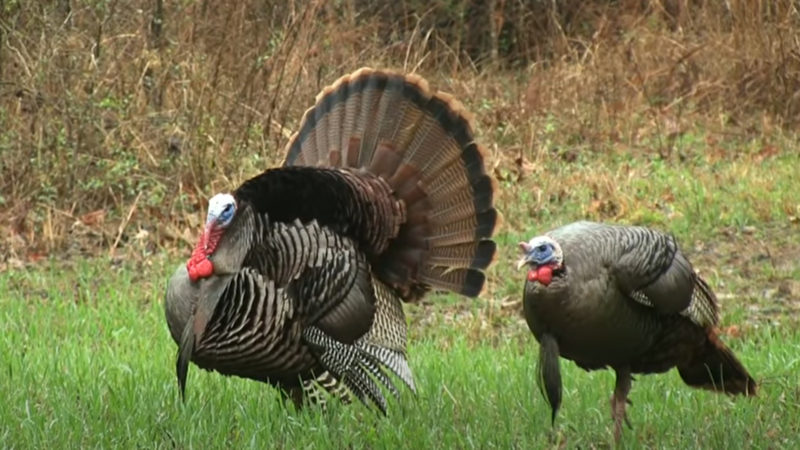
While some parts of the country show continuous growth for the wild turkey population, others experience a different story. Across much of the country, particularly in the southeast, turkey numbers have been on the decline over the last decade.
Why is this happening?
That’s the million dollar question, and one that demands some answers from the experts. Two of the leading wild turkey biologists, Mike Chamberlain and Bret Collier, are committed to finding answers and solutions for the current situation in wild turkey populations across the southeast. Check out the video below from the NWTF on how this research is taking place.
Chamberlain and Collier are best known as the Wild Turkey Docs. They have been collaborating on wild turkey research for nearly a decade. Chamberlain is a professor at the University of Georgia and Collier is a professor at LSU. Their work revolves exclusively around the wild turkey. They work for the wild turkey, but they are also passionate turkey hunters. It’s business and pleasure for these two when it comes to the wild turkey.
But what does their turkey research look like? How is it conducted? The answer might surprise you.
The big concern in the turkey world these days is population decline, and what causes numbers to fluctuate across the landscape. Grad students from both University of Georgia, and LSU, spend much of their time in the field in hopes of gathering data to help narrow down the details on what’s taking place in turkey populations across the south.
How do they do it?
As mentioned in the video above, two of the big tools being used these days for turkey research are a backpack transmitter placed on trapped birds, as well as a Song Meter audio recording device, used to record the gobbling of a turkey.
Research by the Wild Turkey Docs is being conducted to ensure that turkey populations will be alive and well, even 50 years from now.
The backpack transmitter worn by a turkey helps researchers track turkey movement and travel patterns to best show the daily routine of a turkey. As seen in the video above, one gobbler was fitted with a backpack transmitter in 2012, as a mature bird. The team found the transmitter after the bird had been killed by predators 10 years later. It was a long life for this particular gobbler.
The Song Meter is programmed to select the gobbling sound of a turkey to be recorded. The unit is about the size of a trail camera, sells for $850, and features a microphone placed in an elevated position in the tree to record audio. This device helps the team better understand what factors hinder gobbling activity in an area, be it weather, hunting pressure, or other variables.
Chamberlain and Collier spend much of their time working on educating turkey hunters beyond their classroom. Their goal is to help hunters help the turkey populations in their area. Regardless of whether they have 50 acres, or 500, there’s opportunities out there to manage your property to benefit the wild turkey.
“Private land is the key to growth,” says Chamberlain. “Most turkeys live on private land.”
From prescribed burns, to food plots, and creating better nesting cover, every property has potential to benefit the bird.
What about you? What does the turkey population look like where you live? Comment below, and let us know.
Brodie Swisher is a world champion game caller, outdoor writer, seminar speaker and Editor for Bowhunting.com. Brodie and his family live in the Kentucky Lake area of west Tennessee.