LAST UPDATED: January 30th, 2026
Buck fever is real, and I first got to experience it during the opening day of the Illinois firearm season back in 1987. Coincidentally enough, since opening day always falls on a Friday, my mom had to call my school and tell them that I wasn’t able to make it on that day. When asked why I wasn’t able to make it, my mom told them I had a fever.
I, without a doubt, did have a fever that day, because shortly after sunrise, I was battling a huge case of buck fever! I was fortunate enough to harvest my first deer that morning, (a nice 8 pointer), and it is something that I will never forget.
This article is titled “5 ways to manage buck fever”, because I don’t think we as hunters ever want to cure or get rid of buck fever, but we need to learn how to manage it so that we can make our shot count when the moment of truth arises.
What is Buck Fever?
I define buck fever as the mental, physical and emotional symptoms a hunter experiences when faced with the opportunity, or potential opportunity, to harvest a deer.
Essentially, the excitement and adrenaline that comes with the opportunity at a deer can make us fall apart! Some symptoms of buck fever include uncontrollable shaking, memory loss, brain fog, increased pulse and/or heart rate, and even poor decision making ability.
Buck fever can affect hunters differently, with some hunters experiencing different or more severe symptoms than others.
How to Manage Buck Fever
Now that we know what buck fever is, how can we manage it? Like I mentioned in the introduction, managing buck fever is the goal. I don’t want to eliminate it.
Buck fever is one of the reasons I hunt every year, and if those symptoms or excitement ever completely go away, I will probably stop hunting.
I am writing this article as I prepare for my 38th deer season, and even though I am able to manage my buck fever much better than I was back on that opening day of 1987, I still get shook every time I get an opportunity at a deer!
Below are 5 ways that I have learned to manage my buck fever over the years:
1. Practice
Practicing until you become proficient with your weapon is a great way to help manage buck fever. Ideally, I try to practice enough that I can accurately shoot my bow without having to put a lot of thought into my pre-shot routine.
Shooting my bow really should become second nature, and I want my muscle memory to take over, so that I only have to focus on a few things prior to letting an arrow fly.
When I can accurately place the arrow in the bull’s eye consistently, with only focusing on 3 things, I feel confident hitting the woods. I have a 3 point checklist that I go through once I reach full draw:
- Pick a spot
- Settle the pin
- Squeeze the trigger
If I have to think about much more than those three things when I come to full draw, I don’t feel as confident as I think I should when shooting at an animal.
Practicing needs to go much further than standing in front of a target at a known distance and using perfect form. I recommend making your practice sessions as realistic as possible.
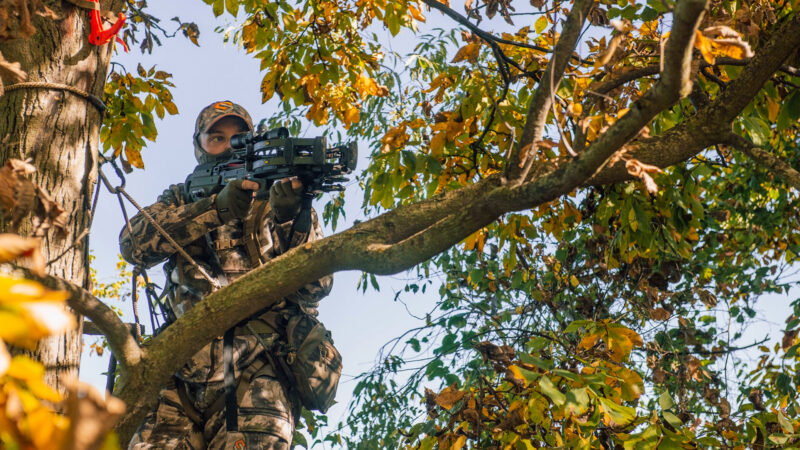
Ideally, I want my practice sessions to replicate my hunting situations as closely as I possibly can. I normally hunt from ground blinds or tree stands, so in the past, I have set up a blind and a tree stand in my yard and practiced out of both.
If I didn’t have a tree stand or a blind to practice from, I shot off my front porch to replicate an elevated position and shot from a chair to replicate shooting from a blind. The more prepared you are with your weapon, the less you will have to focus on when it comes time to make that shot count!
2. Shot Preparation
When I say shot preparation, it really has nothing to do with practicing or shooting your bow, it’s about making your shot as easy as possible when you have an opportunity at a deer.
When I set up my blind and stand locations, I do as much as I can to make sure my shot opportunities are as easy as possible. Like I mentioned before, the less I have to focus on when a deer is approaching, the better my chances are for managing my buck fever. Below are some aspects I try to keep in mind when setting up my stand and blind locations:
- Shooting Lanes: well trimmed with no branches in them that might disappear during the heat of the moment.
- Yardages: use a range finder and learn the distances to known objects such as trees, scrapes or trails.
- Stand Direction: ensure the majority of shot opportunities are in front of the stand or to your left (if right handed). You don’t want to purposely make your most likely shots the most difficult. You also don’t want the sun in your face, if at all possible.
While sitting on stand, I try to be as prepared as possible. I like to use my rangefinder to remind me of yardages, mentally visualize a deer coming down the trailer and note when I have to pick up my bow, stand, draw back, etc.
Even though we can’t control a wild animal and force it to go exactly where we want, the more proactive we can be prior to having the shot opportunity, the better our chances of making it count.
3. Stay Calm
Yes, this one is easier said than done. Believe me; I still get nervous even if a doe is coming down the trail, not to mention if it is a big mature buck! I have used numerous different techniques to try and stay as calm as possible when a deer is closing the distance.
Deep breathing, numbered breathing and even muscle relaxation exercises have all helped to some degree. I recommend trying a variety of different techniques to see what works best for you, but deep focused breathing has been what has helped me the most when preparing for a shot. Another thing that has helped me over the years is trying to focus on what matters.
Yes, huge antlers are hard to keep our eyes off of, but they don’t do anything to help you make the shot. Once I have decided that I am going to shoot a particular deer, I don’t look at the antlers anymore, I focus on when I need to grab my bow, stand up or move, and most importantly, where I need to place my arrow.
This is when all your realistic practice sessions and proactive time in the stand come into play. Have confidence in your ability and know that you know that trail is 23 yards and that you can easily hit your target at that distance.
4. Slow Down
Getting in a hurry is bound to cause mistakes, so slow it down! When I say slow it down, I don’t just mean your physical movements, but also your thought process. When I am preparing for a shot, I try to make sure everything I do is slow and deliberate, whether I am grabbing my bow, standing up, or drawing back, etc.
This is where that proactive time and mental visualization can really pay off. If that buck is coming down the trail like you visualized, you know you need to stand up when he steps behind that tree, and draw when he starts working that mock scrape, etc. Obviously deer don’t always read the script, but it does help to have a game plan prior to go time.
The last thing I want to happen is to get in a hurry and blow the chance at a deer, but buck fever has caused me to make some silly mistakes and has saved more bucks than I can remember.
5. Experience
Without a doubt, and like the old saying goes, “There is no substitute for experience.” The best way to manage buck fever is through experience. The more time I have spent in the woods chasing whitetails and the more encounters I have had, the better I have become at managing buck fever.
Now obviously you can’t magically gain experience instantly, but you can put effort into gaining the most experience possible. I try to increase my experience every year through spending time afield, and it doesn’t necessarily have to be hunting deer.
Turkey hunting and predator hunting can cause some of the same symptoms that buck fever does and can give you more experience preparing and learning how to manage it.
Conclusion
Buck fever is one of the things that got me addicted to deer hunting back when I was a kid, and it is still one of the reasons I hit the woods every year now.
I don’t ever want that feeling of excitement and nervousness to go away, but being able to manage it is important. Managing buck fever can not only help ensure our success filling a tag, but it can even help reduce wounding deer.
Hopefully some of the techniques I have used over the years help you better manage buck fever going forward.