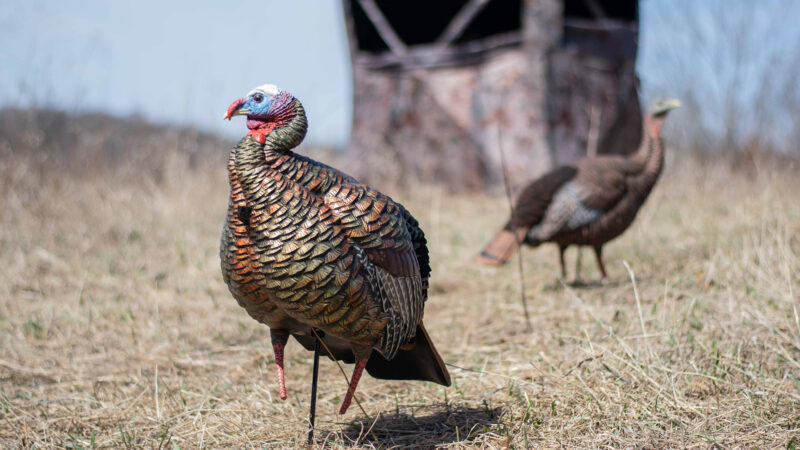
A gobbler sits on a limb, thundering at the sunrise. Moments later, he pitches down, hits the dirt, and power-waddles into the decoys. Within seconds, a safety clicks, a firing pin strikes, and you’re sipping coffee at the truck before sunrise.
Down the road, another strutter dances through a meadow. A few strikes on a slate call bring him on a string. He circles the jake decoy, his vision momentarily obscured by his own tail fan. In that heartbeat, a bow reaches full draw, a sight pin finds its mark, and an arrow bolts downrange. Turkey down.
I’ve spent decades chasing longbeards across the country, and I’ve learned one thing the hard way: a shotgun is the ultimate tool for bagging birds, but a bow is a tool for the ultimate chess match. While the end goal is the same, the path to a notched tag is fundamentally different. If you’re trading lead for carbon this spring, you need to understand these 10 critical differences.
Beware: Bowhunting turkeys is not for the faint of heart.
1. The Weaponry: Kinetic Energy vs. Pattern Density
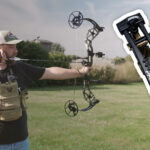
The choice isn’t just “gun vs. bow.” It’s a choice of physics. Shotgunners manage a “cone of lethality,” choosing between semi-auto, pump, or single-shot gauges (12, 20, or the surging .410). Bowhunters, however, deal with a single point of impact. Whether you carry a recurve, compound, or crossbow, your margin for error is razor-thin.
The Veteran’s Edge: If you’re bowhunting, practice drawing and shooting from a seated position. Your muscle memory needs to account for the cramped quarters of a blind or the awkward angles of a field edge.
Being able to draw and let down smoothly is of the utmost importance. Lower your poundage if needed. Turkeys are small, and shots are close, so you don’t need the same kinetic energy required to bowhunt big game.
2. The Gear: The "Range of Truth"
While modern TSS (Tungsten Super Shot) has extended shotgun ranges, a rangefinder is a “nice-to-have” for a gun hunter but a “must-have” for the archer.
A 5-yard estimation error with a shotgun is a dead bird; a 5-yard error with a bow is a clean miss, or worse, a wounded bird.
3. Effective Range: The 20-Yard Line
Standard shotgun ballistics allow for confident kills out to 40 yards (and beyond with modern loads).
For the bowhunter, the “Red Zone” is 20 yards and in. Turkeys have a small killzone, and the margin for error is almost non-existant. A little too high or far forward and you’ll be going home with nothing but feathers to decorate your coffee table.
While 20 yards is a good rule of thumb, 15 yards and in is the sweet spot when bowhunting turkeys.
4. Shot Placement: Broadside vs Head-On (or away)
Shotgunners have one job: put the center of the pattern on the neck/head. Bowhunters have a more complex “map” for effective shot placement.
- Broadside: Aim at the “wing butt” (the shoulder joint). While broadside is widely considered the best shot on a whitetail, and is very effective on turkeys, it’s not my favorite shot.
- Facing Away: Aim at the base of the tail fan (the “Texas Heart Shot”). Although highly discouraged on big game animals, this is my favorite shot on a turkey. When in full strut the tom’s fan hides his head, which makes drawing your bow much easier, and the base of the fan provides a perfect aiming point.
- Headshots: With the popularity of specialized “guillotine” style broadheads, this makes for one of the most lethal shots there is.
5. Decoy Placement: Drawing Them In Tight
A shotgunner typically sets decoys at 20 yards, creating a buffer. If the bird hangs up 20 yards beyond the decoys you can still get a shot. As a bowhunter, you don’t have that luxury.
I set my turkey decoys at 10 to 12 yards.
Why? If a bird “hangs up” 10 yards short of your decoys, he’s still in the 20-yard bow range. If you set your decoys at 20 and he hangs up, you’re looking at a low-percentage 30-yard shot.
6. Meat Preservation: The Clean Harvest
One minor inconvenience of the shotgun is digging lead or tungsten BBs out of the breast meat. With a bow, that isn’t a concern. A well-placed arrow through the vitals or a clean headshot leaves the meat pristine.
This is especially true for head shots with a bow. Head-on or facing-away shots usually result in some minor meat loss depending on your broadhead style and size.
7. The Movement Gap: Beating the Best Eyes in the Woods
A shotgun hunter can often shoulder their weapon and “track” a bird as it approaches. A bowhunter does not have that luxury. The act of drawing a bow is the most significant movement in hunting.
The 180-Degree Rule: The best time to draw is when the bird’s vision is completely obscured—either by a tree, a thicket, or his own tail fan while in full strut. If you can see his eye, he can see you draw.
Once your bird commits to the decoys, let him come all the way in. Chances are he’s going to attack your jake decoy or be laser-focused enough that you can get away with drawing back, even if his head isn’t obscured.
8. The Perfect Disguise: Getting the Shot Off
Bows have a much larger profile than shotguns. The vertical movement of the limbs and the flash of the cams can give you away instantly. This is why many bowhunters add “blind” foliage to their bow limbs and make sure they’re dressed head-to-toe in camo, including a facemask and gloves.
When it comes to outsmarting a turkey’s eyes, leave nothing to chance.
9. Noise and Disturbance: The Silent Advantage
A shotgun blast clears the woods. However, I’ve often seen turkeys in the vicinity of a bird taken with an arrow stay in the field. They are confused by the “flop” but not panicked by a muzzle blast.
This “silent harvest” often allows a second bird to be taken in states with multi-bird limits, or for you and your bowhunting buddy to “double up” on toms.
10. Expanded Opportunities: More Time Afield
Many states offer archery-only seasons that predate the general opener or extend long after the “gun pressure” has chased birds into the thickets.
States like Nebraska, Kansas, and Arizona offer unique archery windows that allow you to hunt unpressured birds before the woods get too crowded.
The Bottom Line For Bowhunting Turkeys
Bowhunting turkeys is a significant challenge, but the reward is unmatched. It demands a deeper understanding of turkey psychology, better woodsman skills, and total control over your nerves.
This spring, don’t just go for the harvest—go for the chess match. Everything is better with a bow.
By