LAST UPDATED: May 1st, 2015
With bow season fast approaching, (some having just begun), the hopes and dreams of tagging that special buck are never more strong. Sadly, for a good number of bowhunters that dream will remain just that……a dream. However, this outcome has little to do with pure hunting skill and more to do with failing to recognize how vital the “little things” are. Without a doubt, when it comes to trophy whitetails, the Devil is in the details. Speaking of details, pay particular attention to the following areas and you just might turn your dreams into reality this fall.
12) Ignoring Murphy’s Law: Anything that can go wrong will go wrong. And when it does, there is usually a big buck somewhere nearby. How often has the simplest little thing cost you a shot at a trophy whitetail? It never fails. You could draw back on a dozen “subordinate bucks” and never have a problem arise. But, put a big mature buck 30 yards downrange and the floodgates of “the ridicules” and “the unforeseen” open wide. This hard fact of life is only magnified for those who are unprepared. What I mean is prepare yourself for anything; because anything is bound to happen. And if you think “that can’t possibly happen to me”, remember, it can and most often will….because Murphy says so.
11) Sixth Sense: Do mature bucks really have a sixth sense? I used to think so. However, over the years, I have come to realize that they are just really, really good at noticing our screw-ups. For instance, mistakes that I commit when in the presence of immature deer routinely go unnoticed. However, if I make those same mistakes around a Pope and Young caliber buck, I’m toast. He will most likely bust me every time.
If your current approach occasionally gets you in hot water with the youngsters on your property, you can pretty much forget about fooling the big boys. They are much smarter. When chasing upper class deer, the biggest mistake many hunters make is that they treat them just like the rest of the herd. The fact is they couldn’t be more different. Nevertheless, a big buck isn’t Nostradamus; he only senses what you allow him to. Don’t make it any easier on him than it already is. Leave no detail to chance when pursuing mature whitetails and you will ultimately eliminate their “sixth sense”.
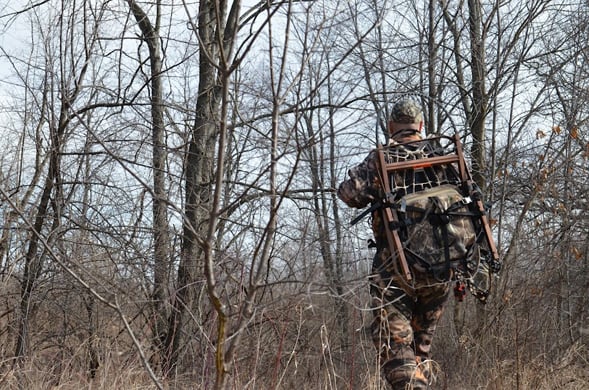
Little details such as entry and exit routes can undo an otherwise good plan.
10) No Shooting Lanes: How many times have you quickly set up your treestand without trimming a few shooting lanes first, only to later have a deer pass by without ever offering a shot? Or, perhaps you do get a shot off and somehow that one branch suddenly materializes out of nowhere; spoiling your certain success.
This one goes back to #12. Anything that can go wrong will go wrong. If you fail to trim adequate shooting lanes, you can bet your quiver full of arrows that if a good buck does happen by, he is most likely going to stay hidden in the security of heavy cover, or, your arrow is likely going to find a forgotten branch. Bank on it. The only way around that painful truth is to make sure you take the time to clear at least one open lane along the buck’s projected path; providing you with an unobstructed shot opportunity.
9) Bad Entry/Exit Routes: You might have the best stand, overlooking the best spot, holding the best sign on your property, but if you are educating deer every time you come and go….you are living on borrowed time. A good stand is only as good as the manner in which it is accessed. If you can’t get in and out with minimal disturbance, you need to consider an alternate route, or maybe a completely new location altogether. I would choose a decent stand location with great access over a great stand location with poor access any day of the week. Just like the mature bucks that you pursue, choose your travel routes with the utmost care.
8) Married To One Stand: When you consider all of the plotting, the planning, the setting up, and the trimming of shooting lanes, it’s easy to understand why we sometimes get attached to certain locations. Working up the courage to “break it off” when you realize that it is time to move on, can be harder than telling your first love goodbye. Yet, in certain circumstances, it must be done.
Just as the conditions change over the course of a season, sometimes your stand locations must do the same. True, you may have a large amount of time invested in your current setup, but that fact alone should never keep you in one location when everything around you suggests its time to move on. Don’t make the mistake of thinking that the next time you hunt your “sentimental favorite” things will be better, because odds are they won’t be. If you’re not seeing deer movement, there is a reason why.
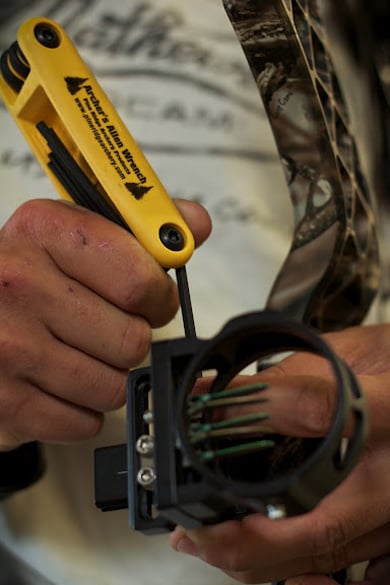
Become “intimate” with your gear and always check to ensure everything is working like it should.
7) Lack Of Patience: Patience can come in many forms. For example, patience during the moment of truth, while walking toward your stand or perhaps even when stalking your prey. However, in this case I’m talking about patience while in the stand. I know a lot of good hunters, who hunt in good locations that simply don’t kill good deer. Why? They don’t have the patience, or “staying power” to remain in the tree long enough to let things unfold. It takes a lot of resolve to remain in the stand for hours on end, day in and day out, waiting on that one special buck to arrive. Some guys simply can’t do it.
The key to putting in the greatest amount of time while in the stand is confidence and comfort. You have to be confident the buck you are after is in the area, either by first hand observation or by scouting camera pictures, otherwise, you will find any excuse to leave. Additionally, staying warm and dry will also ensure you keep your “never give up” attitude over the course of a long morning, afternoon, day, and season. When it comes time to work on improving your patience in the tree stand, remember the 2 C’s.
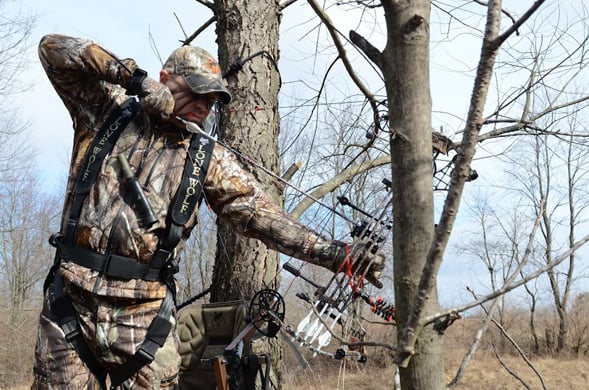
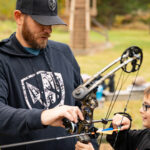
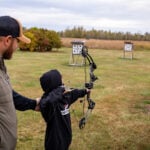
Only “situational” practice can prepare you for the real thing. If your not practicing how you hunt, your odds of pulling off a successful shot are dramatically reduced.
6) Little Practice: I routinely start preparing for the October bow opener sometime in the spring; usually around April or May. I know most of my hunting partners think I am crazy; some even flat out tell me I am. But you know what, the way I see it, when the opportunity comes along to harvest a true monster of a whitetail…..I want to be ready. That chance may not come around again for a very long time, so why wouldn’t I want to be prepared as best I can be.
The only way to assure that you will be ready is by putting in plenty of practice time. Not sloppy practice with little or no purpose. That only reinforces bad shooting habits. Remember also, too much practice can actually be counter productive; wearing down the mind and possibly injuring the body. Practice often, with a specific purpose in mind, but don’t over do things.
For example, if you hunt primarily from an elevated position, then practice from a treestand. If you hunt mostly from a ground blind, crawl inside one and sling some arrows long before opening day arrives. Ultimately, you should strive to match your practice sessions to the hunting gig. Consequently, when that shot of a lifetime does come your way, and someday it will, you will be ready.
5) Hunting The Wrong Wind: We’ve all got a little renegade pumping through our veins; you might say a bit of a gambling side. While those may be beneficial traits on “Lets Make A Deal” or in a Kenny Rogers song, when it comes to chasing big whitetails, they can be the kiss of death; especially when it comes to playing the wind. If you decide to roll the dice with air currents, you will most often loose. Sure, anything is possible. And yes, there are times you will get lucky and blow every theory you’ve ever read about “hunting the wind” right out of the water. But over the long haul your success rate will suffer drastically; particularly if your scent control regimen isn’t quite up to par.
The bottom line: gamble with other parts of your overall game-plan if you must, but give the wind the respect it deserves.
4) Poor Scent Control: As noted above, properly controlling foreign odor is paramount if you want to achieve any type of consistency when it comes to bow bagging giant whitetails. They are masters of survival. Not easily fooled and suspicious of everything. If there is a chink in their armor, a time when they throw caution to the wind (no pun intended), it is during the breeding period. Outside of that time frame you had better be on top of your game when it comes to scent control.
Successfully taming your odor begins with good personal hygiene; however it doesn’t end there; although, that is where a lot of beginning, and sometimes veteran, hunters mess up. They shower using a scent free type of soap, then reach for a freshly washed towel that smells like the detergent aisle at Wal Mart; distributing that April fresh scent all over their body as they dry off. Then, they head for the woods assuming they are invisible to the keen nose of a whitetail. Nothing could be further from the truth.
A total scent control system covers everything from your body to your treestand. Anything that accompanies you into the woods must be kept scent free until it is time to hunt. For example, it does little good to shower, put on your clean hunting clothes, climb into your dirty truck, stop off for gas, walk inside Biscuit World, order up some breakfast, drive to your destination, then grab your bow and your gear and walk to your stand; wearing clothes and boots that smell like Grandma’s house and a BP station.
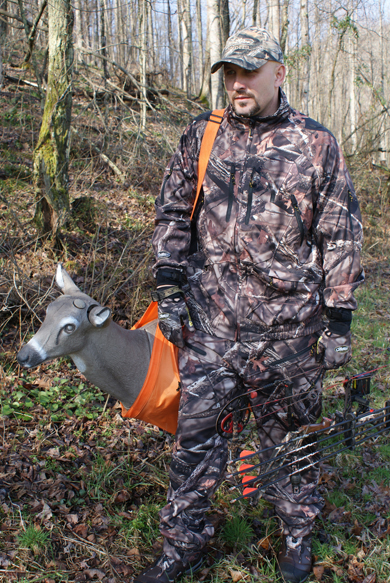
Save your best stands for last. Burning out good “RUT” locations during the early season is a common mistake.
3) Hunting Your Best Stands First: This blunder could easily be attributed to mistake #7. In my youth, I routinely made the mistake of burning out my best stands long before the right time to hunt them had arrived—-the RUT. Don’t be like the young buck in the woods that can’t wait for the action to start. Try to mimic the actual deer you are chasing. What I mean, is lay low, be patient and wait until the does are actually close to coming into heat before you move into your best stands. Ideally, they will be set up in known doe bedding and feeding areas as well as the travel corridors in between.
By waiting until the rut is near before occupying theses stands you will essentially be hunting undisturbed does. That fact alone will greatly increase your odds of tagging out. However, in order to employ this tactic you obviously need to have 2 types of stand setups; Early Season and Rut. No matter how tempting it may be, be strong, be patient and stay out of your best stands until the time is right. You will definitely see an increase in visits to the local taxidermist.
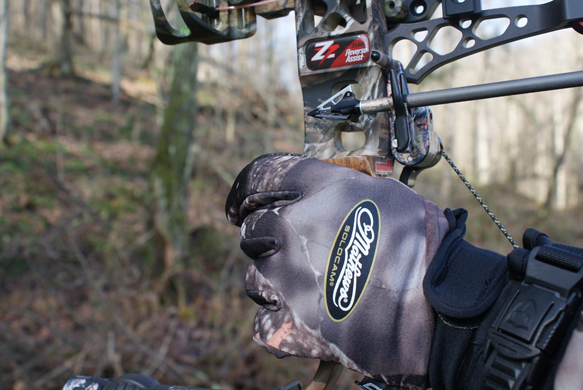
Don’t make the mistake of assuming your broadheads will fly like your fieldpoints. Test them long before opening day to make sure arrow flight is acceptable and accurate.
2) Failure To Pick A Spot: It sounds so simple, yet in the heat of the moment, when that magnificent Pope and Young animal is only a stones throw away, it is one of the hardest things on earth to do; sometimes impossible. Picking a spot to aim at does 2 things that will greatly increase your odds of pulling off a high pressure shot; 1) It takes your attention off of the huge “rocking chair” hovering above the bucks head and 2) It gives you a smaller aiming point, thus increasing your concentration. Aim small—miss small.
If you draw back your bow, staring at that crown of antlers the same way you did the first time the neighborhood cutie kissed you on the cheek……your gonna miss. There will be plenty of time to gawk after the buck is on the ground. Before the shot, find one single hair, spot, or discoloration on the buck’s chest and don’t take your eyes off of it until your broadhead drives straight through it.
Naturally, if you wait until the real deal is standing in front of you before attempting this technique it will be extremely difficult to remember to “pick a spot.” Most often, I can’t even remember where I live, let alone remind myself to choose a single aiming point. Therefore, “picking a spot” must be something that is present within your current shooting routine. If it isn’t….it should be. From this point forward, never take another shot at a 3-D target or game animal without picking a small defined aiming point. Preferably, this should occur before you even draw back your bow and continue until after the string has sprung forward and the arrow hits pay-dirt.
1) Hunting Where Mature Bucks Don’t Live: This is it! Numero Uno! No technical stuff or complex strategies to remember, just the painful truth. Let’s face it, no amount of techniques or advice will put you close to a trophy animal if there isn’t any residing in your hunting area. I use to believe that if I followed all of the steps in the “how-to” articles that I would eventually get my buck. Boy was I wrong. True, I was successful. But the next level animals never came to me.
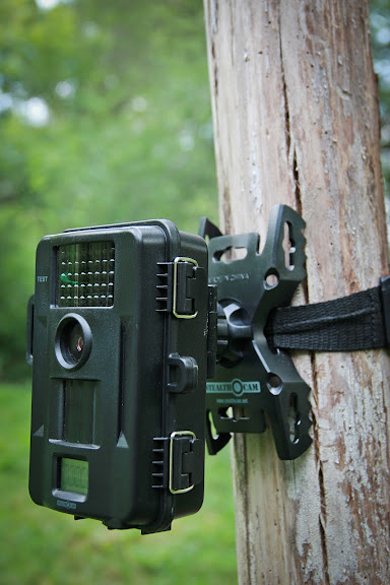
Trail cameras are an excellent resource to confirm your hopes that a trophy buck is indeed roaming your hunting area.
I naively assumed my lack of success was due to something I was doing wrong. The reality of it was there weren’t that many, if any at all, true “monster bucks” roaming my hunting area. It wasn’t until after I began hunting in locations known for P&Y caliber animals that I soon found success.
The bottom line is there are numerous factors at work that are either going to make or break your chances of harvesting a trophy buck. Each is important and each should be given their due respect. However, you’ve got to be hunting where Pope and Young Class bucks reside or you may never get your chance at one; regardless of everything else you are doing right. Here’s hoping that day finds you this upcoming season. Good Luck!