LAST UPDATED: May 1st, 2015
You can’t win if you don’t play”. How many times have you heard that axiom? Well, it certainly applies to bowhunting for whitetails. You’re not going to fill any tags sitting on your couch. In the early part of the season, it’s no problem suiting up for a day in the tree. Come winter, however, it’s a whole new ballgame. Spending time in a blind or a tree stand when it’s below freezing is no small task. It’s cold out there!
As painful as it might be, however, the bowhunting can often be crazy good on those days when Jack Frost is nipping at your nose. The more the mercury drops, the more deer feel the need to feed. And as long as they’re on their feet moving, you’ve got a fighting chance at tagging a giant. The key to being able to endure a cold day afield is staying warm. If you get cold, you’re likely to bolt. It’s hard to convince yourself to stick it out with chattering teeth when you know the warm cab of your truck is not far away.
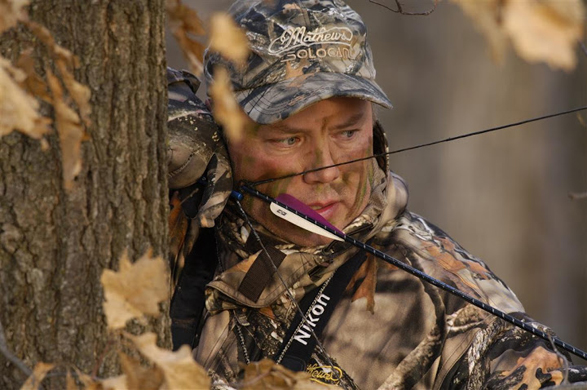
Don’t let the cold temps of late-season send you home before you fill your tag—-have a plan that will help you beat the elements.
The simplest method would be to hunt from some sort of enclosed blind with a heater inside. That’s a no-brainer. And if you’ve got a place to hunt where that’s possible, by all means go for it. Many of us don’t have that luxury. We hunt from tree stands and/or portable, pop-up ground blinds, where we have to fend for ourselves against the elements.
Layering
Clothing for hunters has come a long way since the days when military surplus gear was the norm. There are all sorts of technical fabrics that we can take advantage of to keep us warm on a late-season bowhunt. Nothing you wear is more important than the base layer – the clothes that actually touch your skin.
Start with a lightweight, form-fitting shirt, pants and socks made from a moisture-wicking fabric. You want a layer that will take perspiration generated during the hike to your spot and climb into your stand, and push it out through your clothes, as opposed to trapping it against your body, like cotton will do. Having moisture trapped against your body is a surefire way to get real cold—-real fast. Check any hunting gear store and you’ll find more moisture-wicking base layers than you can shake a stick at. Under Armour, Sitka, Carhartt, Cabela’s, Hunter’s Specialties, etc. all have offerings in this category. Choose whichever you like best.
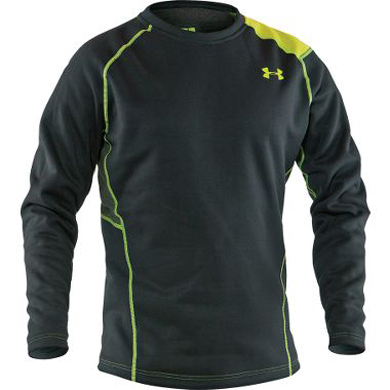
A good cold weather system begins with a good set of base-layers.
Next, go for another base-layer shirt and pants, but this time, choose layers made for cold weather. Usually, these will have a fleece fabric on the inside. Fleece is a great insulator because air is able to be trapped between its fibers. That means it’s keeping your body’s naturally-produced heat from escaping. You want these clothes to be base layers so that they’re tight. Bulk is one of the cold-weather bowhunter’s worst enemies. It impedes our ability to draw and shoot a bow. A good pair of Merino wool socks will round out your layers of undergarments.
Beware of the Bulk
For your outer layers, again, keep bulk in mind. You can’t simply grab the biggest, heaviest parka on the shelf. Yes, that coat is probably very warm, but you can bet the farm it’s going to cause you problems when it comes time to shoot. Remember, lots of clothing manufacturers make outer layers specifically with bowhunters in mind. Their gear will have insulation and wind-proof material combined in garments that are sleek and form fitting, so they don’t interfere with a bowstring. Outerwear is not something you should buy from a catalog. You need to actually check out how it fits, and how it reacts in the drawing motion, to determine if it’s right for you.
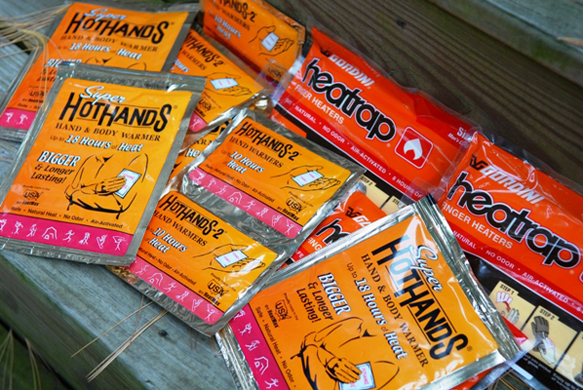
Chemical hand-warmers will allow you to wear less clothing and avoid the problems that accompany a bulky jacket.
Plan on removing those outer layers for the hike to your hunting spot and while climbing into a tree stand. You want to minimize sweating as much as possible, and those heavy outer layers can cause you to overheat quickly when you’re exerting yourself. Just stuff them in a pack until you’re situated for the hunt. A thick, fleece or wool hat will keep your head warm. If you just have to wear a baseball hat, at least get a fleece hat to pull down over top of it to cover your ears. Facemasks and neck gaiters also are great for keeping those areas warm. When it comes to gloves, you’ve got two options. You can go thin, so you can shoot your bow while wearing your gloves. Or get a thick pair, and plan on removing them when it comes time to shoot. Personally, I prefer wearing thin gloves and having a muff around my waist to stuff my hands inside while sitting.
Keeping Your Piggies Warm
Finding the right boots is a tricky proposition. People’s feet react wildly different to cold weather. Simply put, some feet handle cold better than others. The problem with cold-weather boots is that the best insulating footwear – having at least 2,500 grams of Thinsulation seldom is the most comfortable for walking. These boots will keep your toes toasty on sub-zero days, but if you have to walk more than 50 feet in them, or climb into a tree stand, you’ll curse having bought them. They’re bulky, heavy, and with extra thick soles, they are built for turning ankles. Think about what you need your boots to do before selecting a pair. Fortunately, the next item can eliminate the need for super-heavy pac-boots.
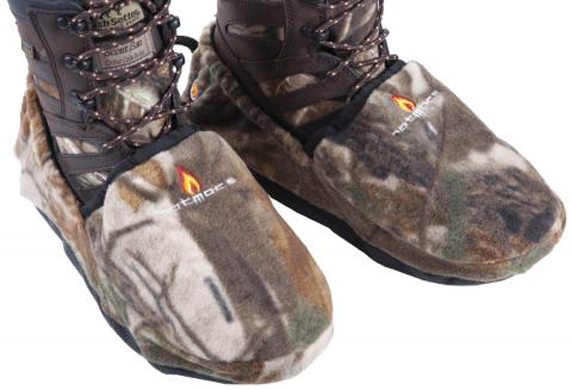
Products like Hot Mocs will allow you to wear lighter boots but remain warm while on stand.
Outer Suits
The first day I hunted with a Heater Body Suit I thought I’d died and gone to heaven. The air temperature was 10 degrees, but inside my suit, I couldn’t have been toastier. A similar product is the IWOM. Basically, think of the Heater Body Suit and the IWOM as sleeping bags for hunting. You get inside them with all your hunting clothing on. The Heater Body Suit has legs, but no arms, while the IWOM has arms, but no legs.
The Heater suit has straps that hold it in place on your upper body. When it comes time to shoot, you unzip it, pull your arms outside and push the suit back behind your shoulders. Now, your arms and hands are free to draw and shoot a bow. The upper portion of the IWOM fits like a jacket, so shooting with it on is no different. Both suits roll up so you can pack them in to your stand or blind.
To really get the heat rolling inside your Heater Body Suit or IWOM, drop a couple chemical handwarmers into the bottom. You will be amazed at how much heat they will produce inside the suit. Heck, on one 20-degree hunt, I placed four handwarmers in my Heater suit, and, before long, I had to take off my jacket. It got too warm inside the suit.
Extras
You can buy chemical handwarmers just about anywhere these days. They even make large ones called “body warmers” that last longer and have more surface area. You can stuff these warmers in your pants and coat pockets, in your boots, in your hand muff – just about anywhere you want to produce heat. Just don’t leave them against bare skin for a prolonged period. You can actually burn yourself.
I once saw a guy on television that had his wife make him a simple jacket and pants out of a thin fabric, and she sewed little pockets all over both garments. When the guy went out hunting, he put a handwarmer in each pocket. He said he was nice and warm all day.
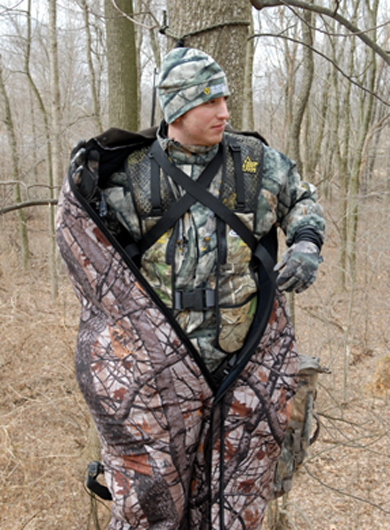
Nothing says warmth like a big ol’ sleeping bag made for hunting!
Tree stand hunters should always remember to bring a thick, padded seat on cold-weather hunts. Nothing will suck the heat out of your body faster than sitting on a bare metal seat. The pad is softer anyway, but the insulation it provides is more important during the late-season. Also, be sure to have a handkerchief. Your nose is going to run in cold weather. You’ll be surprised what it will do for your comfort just to get that liquid out. It’s better than wiping your nose on a glove or sleeve all day, leaving those items wet. Lastly, take some food with you. Digestion burns calories which creates body heat. Think of eating some crackers or a sandwich as tossing another log on the fire.
There are a lot of people who will think you’re nuts for heading out into the woods on a freezing cold day to sit motionless for several hours. To them, that’s a recipe for torture. Gear up appropriately, and it doesn’t have to be as uncomfortable as it seems. Besides that, when a big buck comes sneaking toward your stand, you’ll forget how cold it really is.